Roof Repair vs. Replacement: How to Know Which One You Really Need
June 29, 2026

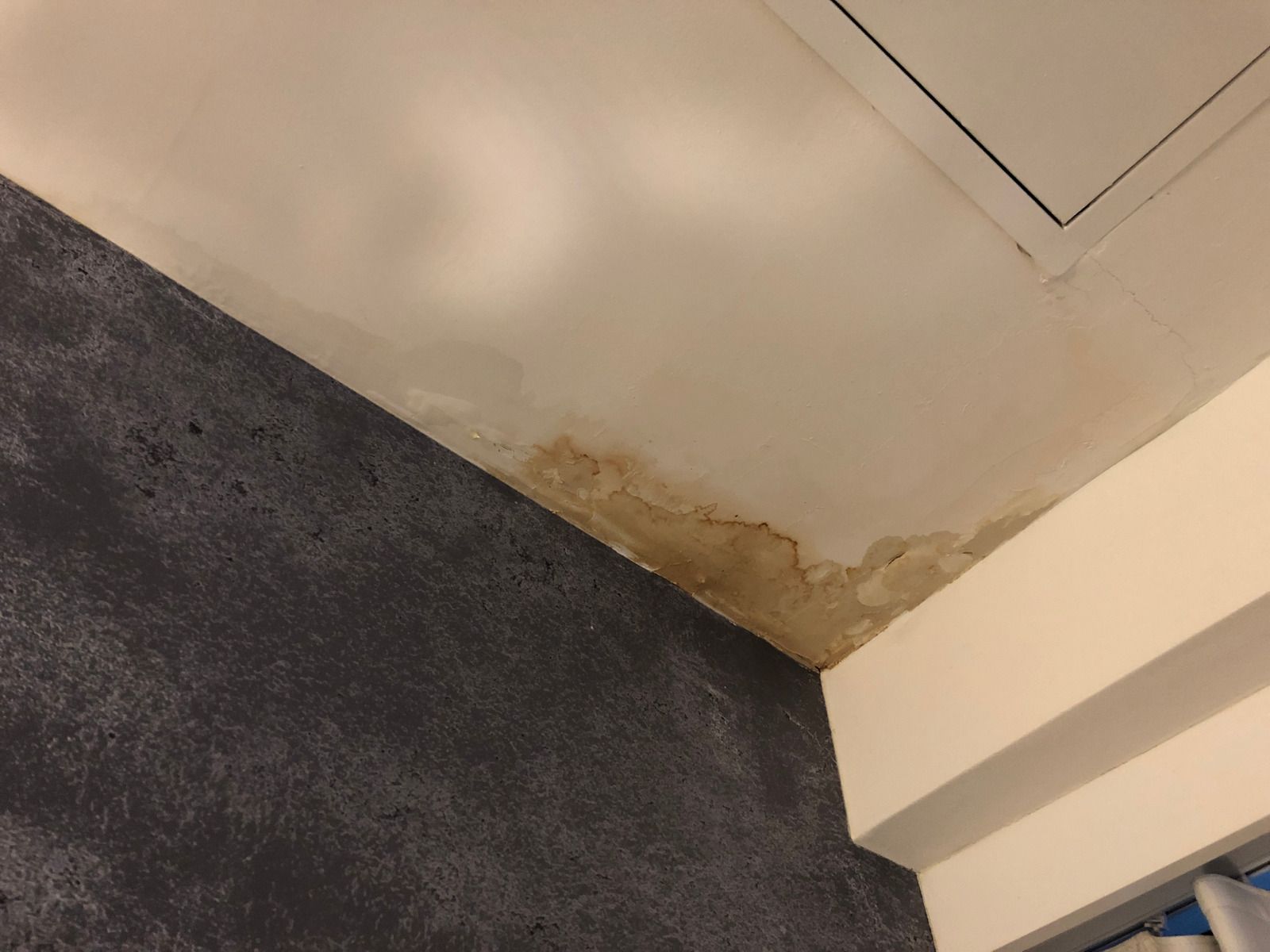
You spot it after the first real monsoon storm. A faint brown ring on the bedroom ceiling, or shingles in the yard that used to be on your roof. Your first thought is the one everybody has. Do I patch this, or am I buying a whole new roof? Here is the short version: most roofs that leak do not need replacing. They need the right repair in the right spot.
The hard part is telling a small problem from the early sign of a roof giving out. After thousands of roofs across the Valley, the pattern holds. The call almost never rests on the leak you can see. It rests on what sits under the surface, how old the roof is, and how often you have patched that same area. Get those three right and the question answers itself.
The One Question That Decides Repair or Replacement
Repair or replace comes down to one thing: is the damage local, or has the whole roof started failing at once? A roof leaks in one spot from one failure, a lifted shingle, a cracked tile, a dried out seal at a vent. That is a repair. A roof leaking in three new spots over one summer usually means the waterproofing underneath has aged out everywhere together. That is a replacement waiting to happen.
The rough field rule is the 30 percent line. When damage covers under a third of the roof and the rest still has life in it, repair makes sense. Cross that line, or keep patching the same slope every monsoon, and repeat visits add up faster than a new roof. Age weighs just as heavy. Asphalt shingles in Arizona sun rarely pass 15 to 18 years, and even tile that lasts 40 years rides on felt that does not.
TIP: Before you climb anything, walk your property line with binoculars and look for shiny bald patches and slipped tiles. Then check your gutters for a sandy pile of granules. A gutter full of grit means the surface is wearing through, which points to age, not a one off leak.
WARNING: Stay off tile roofs, and off any roof on summer afternoons. Tiles crack under your weight, and surface temperatures past noon can pass 160 degrees, hot enough to burn skin and soften your footing. Inspect from the ground or attic and let us get up there safely.
What Wears a Mesa Roof Down
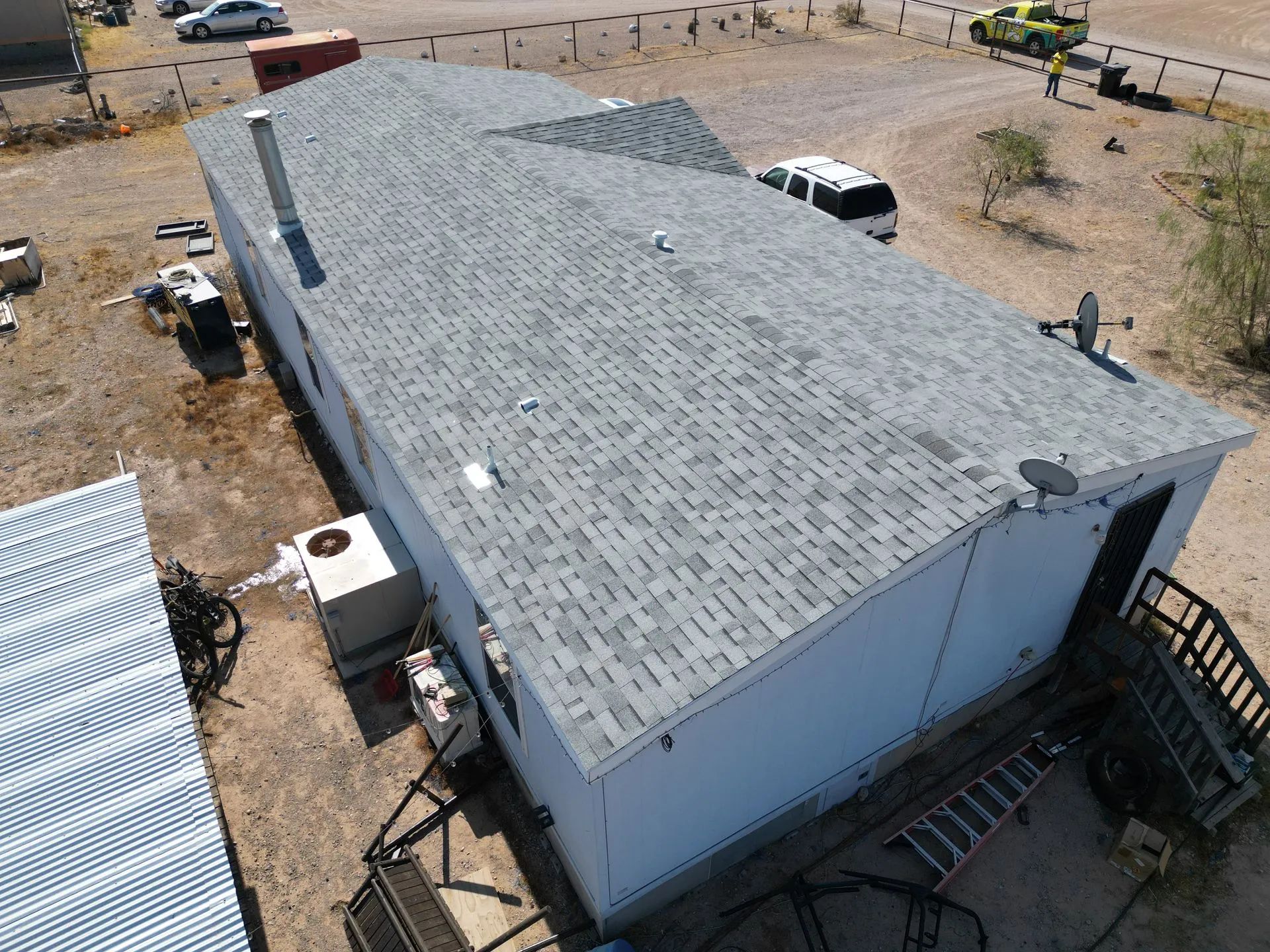
Sun does most of the damage here, long before any storm arrives. Ultraviolet light bakes the oils out of asphalt shingles and dries the sealant around every vent, skylight, and swamp cooler curb on your roof. That drying is why so many Mesa leaks start at penetrations, not open field shingle. We see it weekly: shingles that look fine over a vent boot gone brittle and split.
Monsoon season is the second force. From mid June into September, sixty mile an hour gusts and blowing dust hit roofs that spent spring turning brittle. Wind lifts the weak edges, dust sandblasts the surface, then a downpour finds every gap. Hot days and cool nights do the rest, working fasteners loose and opening seams wider each year.
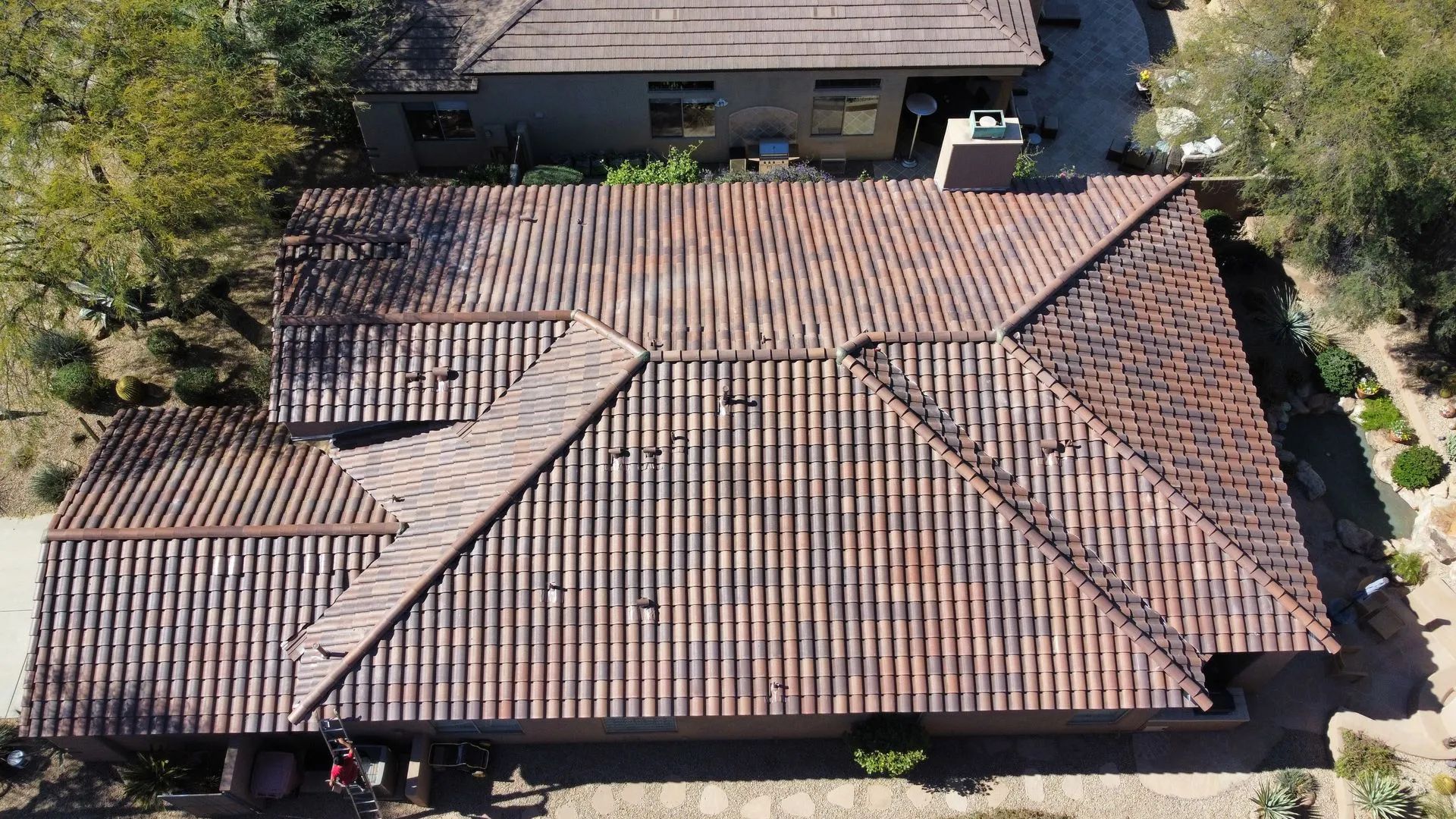
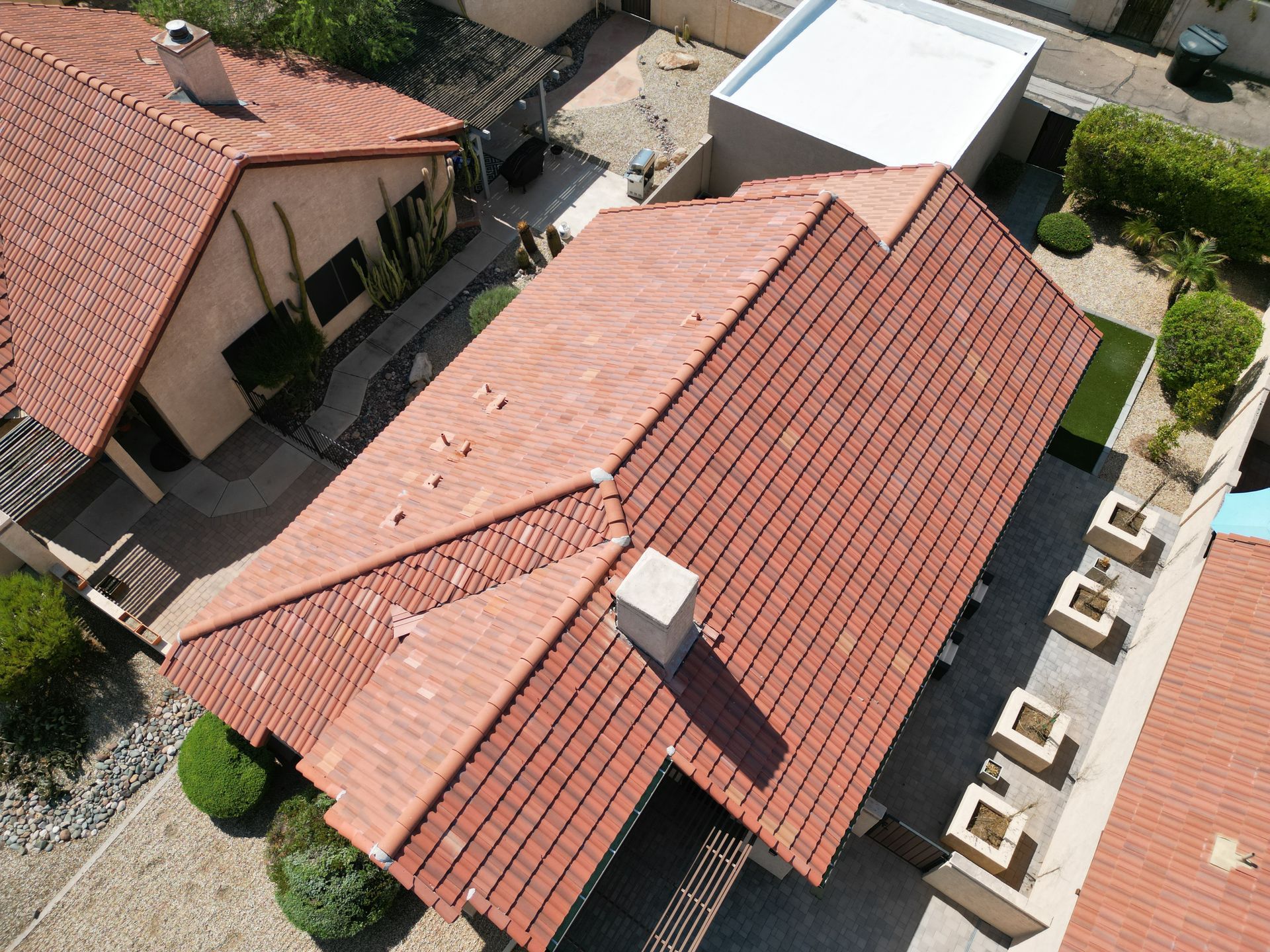
On tile roofs the real story hides underneath. The tile is a sunshade. The felt beneath it does the waterproofing, and that felt cooks out in roughly 15 to 20 years under our heat. Owners are stunned their 50 year tile roof needs work at year 18, but that is the underlayment talking, not the tile.
A Quick Read on What You Are Seeing
| What You Are Seeing | Most Likely Cause | Severity | First Step to Take |
|---|---|---|---|
| Brown ring on a ceiling after rain | Failed seal at a vent, skylight, or cooler curb | Medium | Check the attic above the stain for a wet rafter |
| Shingles in the yard after a storm | Wind uplift on heat weakened shingles | Medium | Photograph the bare spot and cover it before the next rain |
| Sandy grit filling the gutters | Granule loss from sun aged shingles | Medium | Note the roof age; roof wide loss points to replacement |
| A single cracked or slipped tile | Foot traffic or storm impact | Low | Mark the tile and keep weight off the area around it |
| Several leaks in one monsoon season | Underlayment aging out across the roof | High | Book a full underlayment inspection |
| Daylight visible in the attic | Open gap in the decking or flashing | High | Stop using that room and have it sealed fast |
| Cracked, curling shingle edges | Heat and UV drying the asphalt | Medium | Track how much of the roof is affected |
| Sagging roofline or soft decking | Long standing water damage to the structure | High | Stay off the roof and book an inspection now |
How We Make the Call in the Field
We start at the ceiling, not the shingles. Your ceiling shows where water lands, and we trace it uphill, since water rarely runs straight down. Then we get into the attic with a moisture meter, hunting for damp decking, daylight, and the dark trails old leaks leave behind.
Only then do we get on the roof, checking the penetrations first, since that is where most Arizona leaks live. We lift tiles to read the underlayment, press on decking for soft spots, and judge granule wear across the whole field. On a tile roof we are really inspecting the felt. That one check, underlayment condition against roof age, settles most repair or replace calls before we quote a thing.
Repair or Replace, Honestly
Repair wins when the damage is contained and the rest of the roof is sound. A few lifted shingles, a split boot, a slipped tile, a dried out seal: these are afternoon fixes that buy you years, and on a younger roof they are the clear choice. You can handle the smallest yourself, like clearing debris from valleys on a cool morning, but anything with height or tile is ours.
Replacement makes more sense once the math turns. When the underlayment has baked out, when granule loss is roof wide, or when you have patched the same slope two or three monsoons running, each repair is just renting time. A roof past 15 years leaking in fresh spots every season is telling you the waterproofing has given out as a whole.
| Factor | Repair | Replacement |
|---|---|---|
| Up front effort | Small and quick | A larger project over several days |
| Lifespan gained | A few years on a sound roof | A fresh full life cycle |
| Reliability | Strong when damage is local | Strong across the whole roof |
| Best when | Damage is under about a third of the roof | Damage is widespread or the roof is aging out |
Mistakes That Turn a Small Fix Into a New Roof
Waiting out a small leak is the big one. A faint stain feels minor, so it sits until the next storm, and by then water has soaked the decking for weeks, rotting wood that now has to come out too. Sealing over a problem instead of finding it is next: a smear of roof cement hides the symptom while the underlayment keeps failing, so the leak slides a few feet over. And skipping the attic check sends people chasing the stain instead of the source, which sits uphill nearly every time.
Frequently Asked Questions
How long can I wait before fixing a roof leak?
Not long once monsoon season starts. A small ceiling stain can soak your decking within a few weeks of repeated storms, turning a quick repair into full wood replacement. The moment water shows inside, have it inspected before the next storm reaches that same spot.
Is it safe to inspect my own roof?
From the ground or your attic, yes. On the roof itself, no. Tile cracks under your weight, and Arizona surface temperatures past noon can scald skin and soften your footing. Look with binoculars and a flashlight, then let us climb up and inspect it safely.
Does a tile roof need work if the tiles still look fine?
Often, yes. In Mesa the felt underlayment beneath your tile does the waterproofing, and it bakes out around year 18 while the tile still looks perfect from the street. A roof that appears flawless can already be leaking through tired, brittle felt underneath those tiles.
How do I know if my whole roof is failing or just one spot?
Count your leaks and check the age. One leak in one place after a storm is usually a simple repair. Three leaks across a single monsoon season on a roof past 15 years means the waterproofing has aged out everywhere at once, not in isolation.
Can I just reseal a leak myself to save time?
A small gap on a cool morning, maybe. The risk is sealing over the symptom while the real source sits uphill, untouched. Roof cement smeared on a stain hides the problem and lets it slide sideways, so the leak returns a few feet over soon.
Proven Roof Repair and Replacement You Can Trust
The roof decision is never really about the leak you can see. It is about what sits under the surface, how old the roof is, and how often you have patched the same spot, and in Mesa that math runs faster than almost anywhere thanks to our sun and monsoon one two punch. A tile roof can look perfect at the curb while the felt beneath it quietly gives out. At A1 Roofing Solutions, we have spent more than 25
years reading exactly that difference for homeowners across Mesa, Arizona. If you are staring at a stain or a slipped tile and wondering which way it goes, we will get on the roof, check the underlayment, and give you the honest answer: a repair that holds, or a replacement worth making. Reach out and we will take a look.