Tile Roof Cracked or Slipped Tiles After a Monsoon? What to Check
July 21, 2026
Quick Answer: After a monsoon, cracked slipped roof tiles are a warning that the waterproofing layer beneath them may be exposed. Tiles shed water, but the underlayment underneath is what actually keeps the house dry. Check from the ground for broken pieces, gaps, shifted rows, and tile fragments in the gutters, then look inside for fresh ceiling stains. A single displaced tile can let wind-driven rain reach the underlayment, so the safe move is to have the roof inspected rather than wait for a leak.
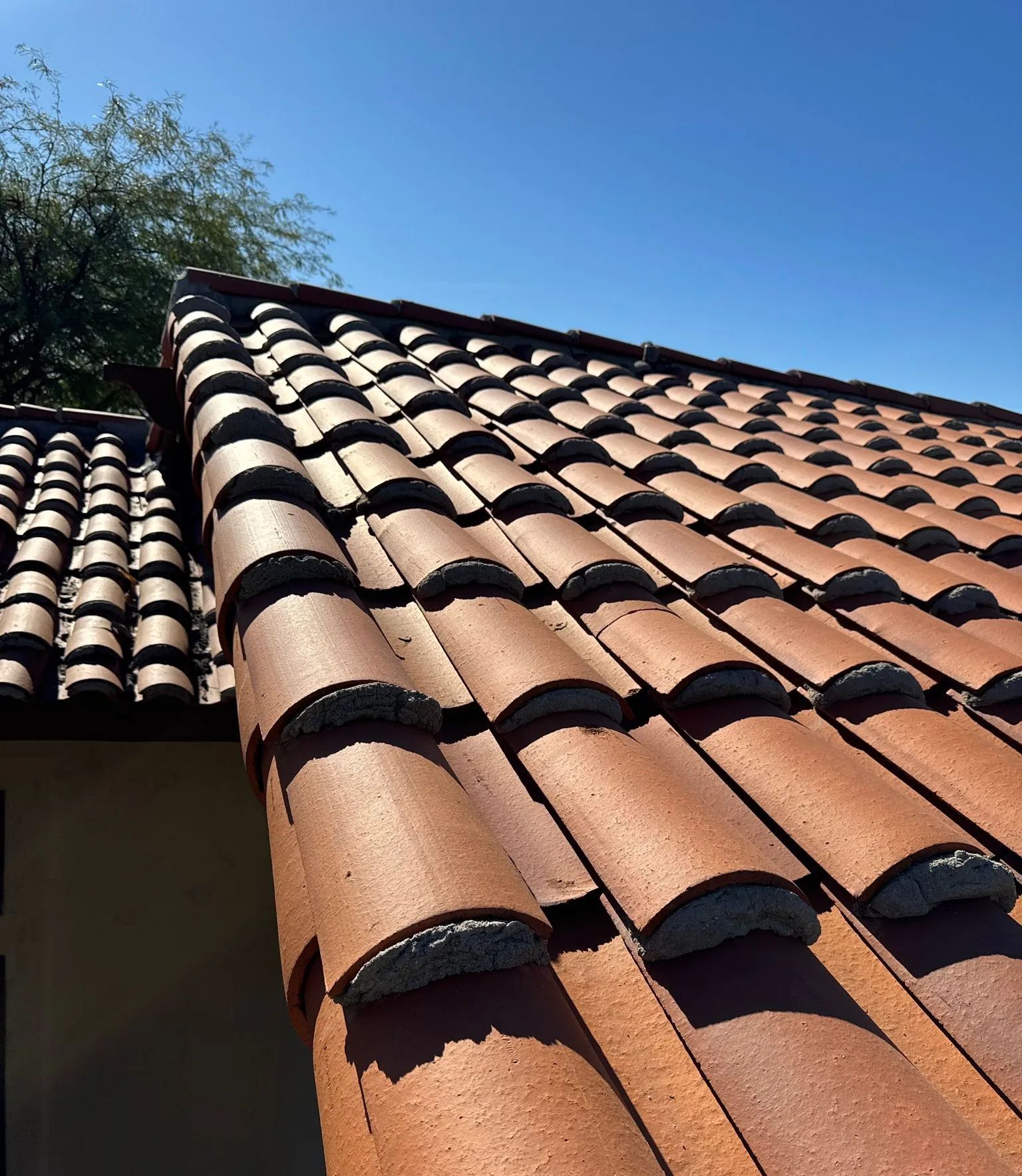
The storm rolls through in the evening, wind driving sheets of rain sideways, and by morning the sky is clear again like nothing happened. Then you glance up at the roof and something looks off. A tile is sitting crooked, a corner has snapped off, or a whole row seems to have slid down a few inches from where it used to line up. On the driveway you spot a chunk of concrete or clay that used to be part of your roof.
That sinking feeling is warranted, but the reason may not be the one you think. On a tile roof, the tile you can see from the ground is not the part keeping water out of your home. Understanding that one fact changes how you read the damage, what you check for, and how urgently you act after a monsoon blows through the Valley.
WARNING: Stay off tile roofs, and off any roof on summer afternoons. Tiles crack under your weight, and surface temperatures past noon can pass 160 degrees, hot enough to burn skin and soften your footing. Inspect from the ground or attic and let us get up there safely.
Why a Cracked or Slipped Tile Is More Serious Than It Looks
Homeowners tend to assume the tile is the waterproofing. It is not. Clay and concrete tiles are the shield: they block the sun, take the impact of wind and debris, and shed the bulk of the rain. The actual watertight barrier is the underlayment, a continuous membrane rolled out across the roof deck underneath every tile.
The tile sheds water, the underlayment stops it
Tile is designed to let most rain run off, while a small amount of wind-driven water is expected to slip beneath it. The underlayment catches that water and channels it safely off the roof. As long as that hidden layer is intact, the roof stays dry even when a few tiles are cracked. Once the underlayment is exposed or torn, the protection is gone.
A cracked tile removes the shield over the underlayment
When a tile breaks or slides out of position, the membrane below is suddenly exposed to direct sun, blowing dust, and the next round of rain. In the desert, roof surfaces routinely climb past 160 degrees, and the trapped air beneath the tiles can run even hotter. That heat cooks an exposed section of underlayment far faster than the tile ever would have allowed, quietly shortening the life of the whole system from one small gap.
WARNING: Stay off tile roofs, and off any roof on summer afternoons. Tiles crack under your weight, and surface temperatures past noon can pass 160 degrees, hot enough to burn skin and soften your footing. Inspect from the ground or attic and let us get up there safely.
What a Monsoon Actually Does to a Tile Roof
Monsoon storms are hard on tile in a way that ordinary Valley weather is not, and it helps to know the forces at work when you go looking for damage.
Wind lifts tiles that were already loose
Gusts in a strong monsoon can push past 60 miles per hour, and that is enough to lift tiles that have lost their grip. Over years of heat, the fasteners, clips, and mortar that hold tiles in place fatigue and weaken. A storm does not usually break a healthy roof; it finds the tiles that were already compromised and moves them, which is why slipped rows so often show up the morning after.
Flying debris cracks tiles on impact
Palm fronds, broken branches, gravel, and loose yard objects become projectiles in a monsoon. A single hard strike can crack or shatter a tile even if the fastening was sound. This is different from a slipped tile: the piece may still be in position but split down the middle, which is easy to miss from the ground.
Heat and thermal movement set the stage
Long before the storm, the daily swing between blistering afternoons and cooler nights makes tile and roof materials expand and contract. That constant movement loosens fasteners and works tiles out of alignment over time. By the time the monsoon arrives, the roof has plenty of weak spots waiting to give.
What to Check From the Ground After a Storm
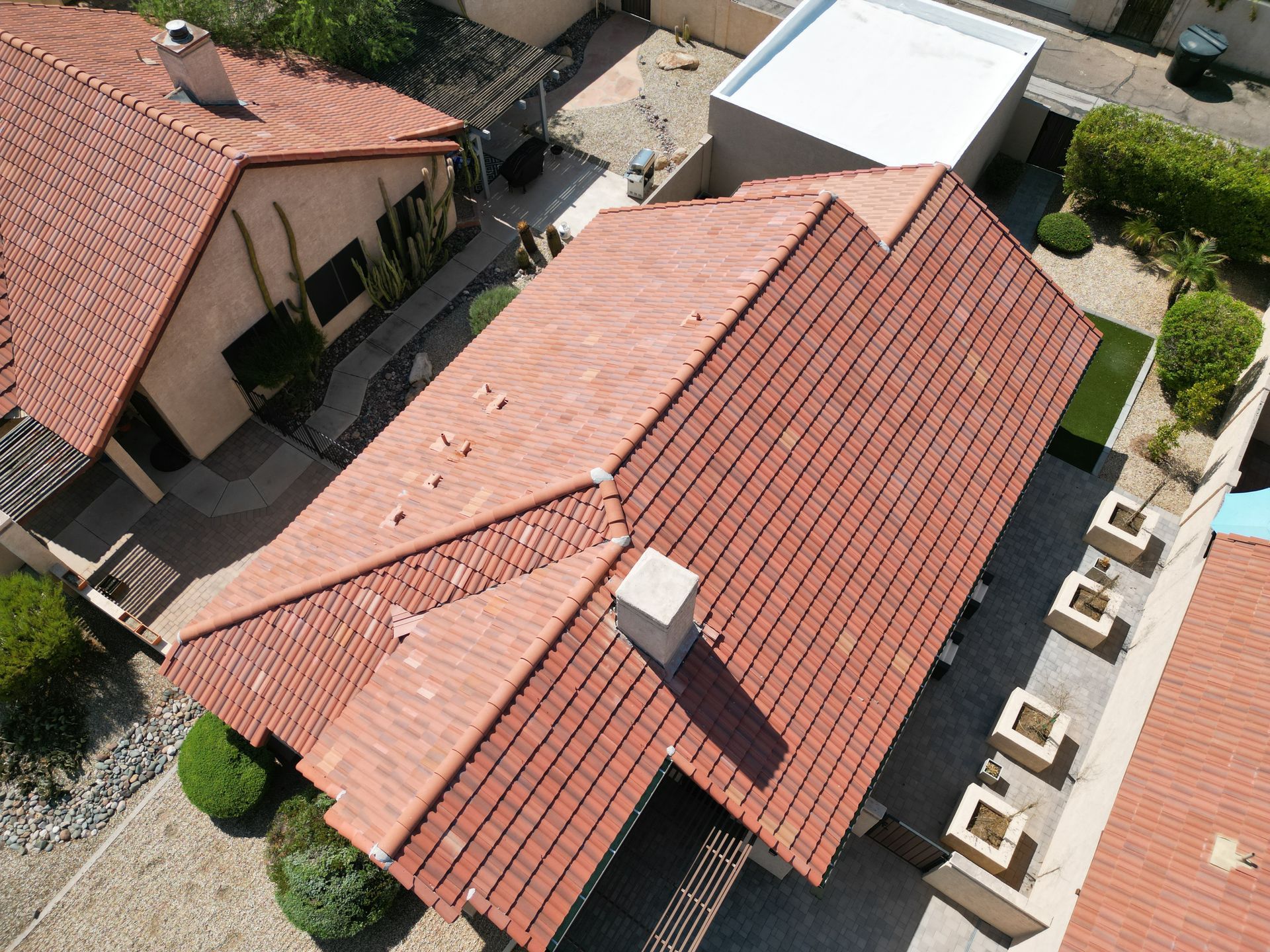
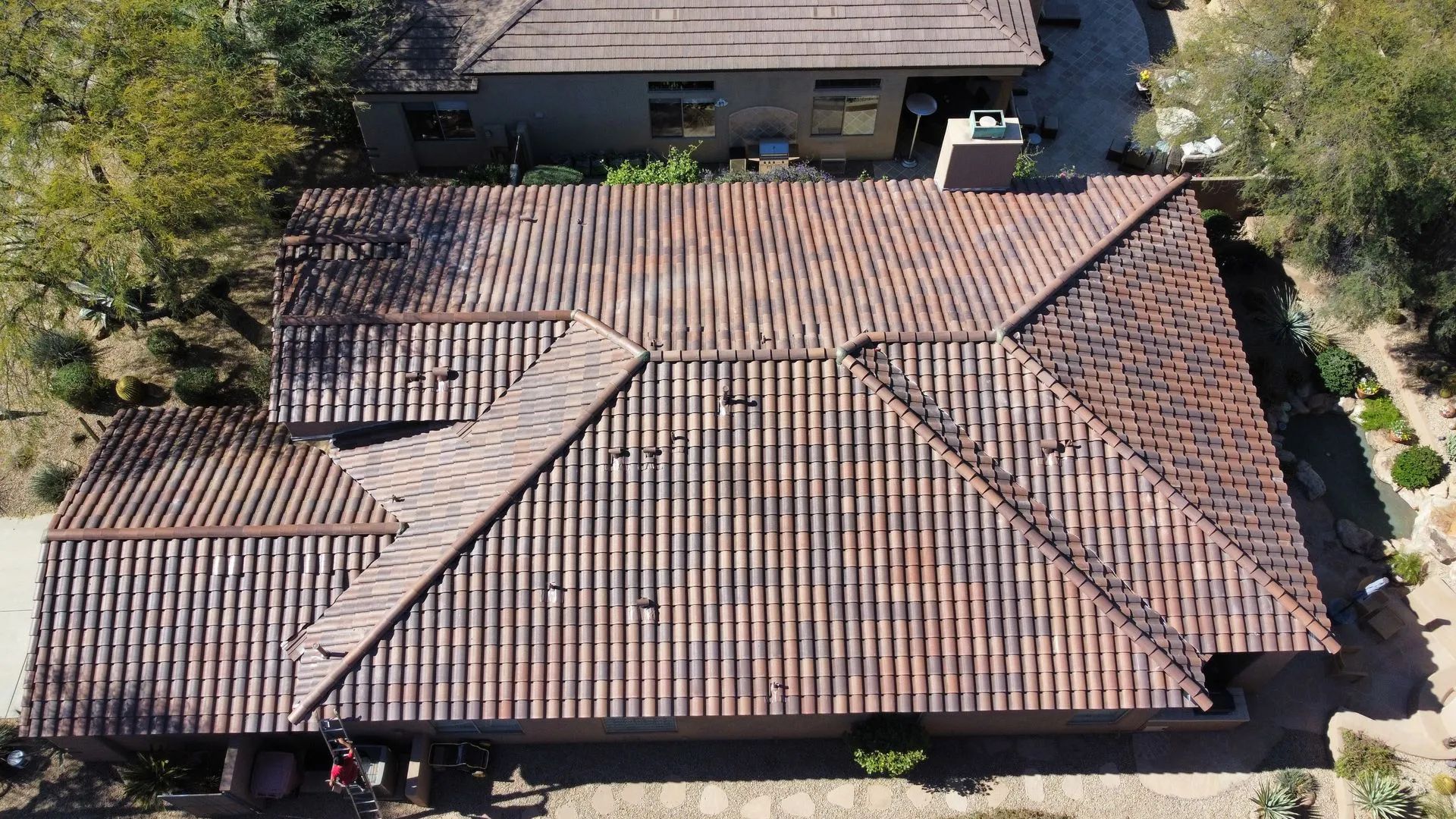
You can learn a lot without ever leaving the yard. Walk the full perimeter of the house slowly and look up at the roof from several angles, ideally with the low morning or evening sun highlighting the surface.
Look for gaps and missing pieces in the tile field
Scan the rows for any spot where a tile is clearly absent, leaving a darker rectangle where the underlayment or batten shows through. Even one open gap is a direct path for the next storm to reach the membrane.
Watch for shifted or uneven rows
Tiles are meant to run in straight, even courses. A row that dips, a tile that sits higher or lower than its neighbors, or a section that looks wavy usually means fasteners let go and the tiles slid. Displacement like this often signals the underlayment below has been disturbed.
Check the ground and gutters for fragments
Pieces of tile in the yard, on walkways, or collected in the gutters and valleys tell you tiles have broken and shed material. Small chips and granules washing down also hint that something up top is coming apart.
Look inside before you assume the worst
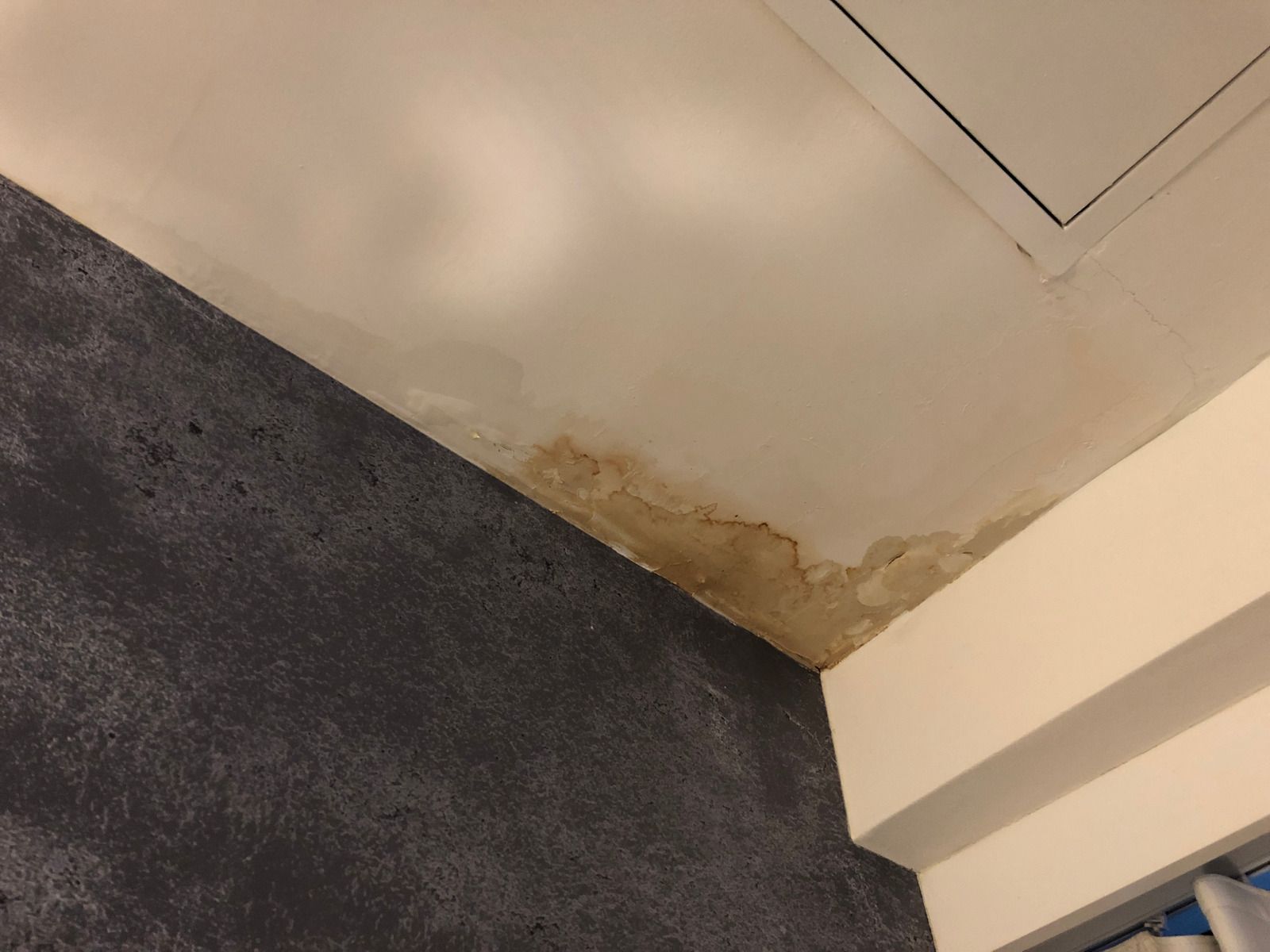
Step into the house and check ceilings and upper walls for fresh brown or yellow stains, bubbling paint, or damp spots. If you can safely reach the attic, look for daylight coming through, wet decking, or damp insulation. Interior signs sometimes appear days after the rain, so a clear ceiling today does not fully rule out a problem.
TIP: Take clear photos from the ground of anything that looks off, and note the date of the storm. A time-stamped set of images gives a roofer a reference point, helps track whether a slipped area is getting worse between storms, and makes the eventual inspection faster and more targeted.
WARNING: Stay off tile roofs, and off any roof on summer afternoons. Tiles crack under your weight, and surface temperatures past noon can pass 160 degrees, hot enough to burn skin and soften your footing. Inspect from the ground or attic and let us get up there safely.
How the Damage Gets Diagnosed and Corrected
Because the real question is always the condition of the underlayment, a proper look means more than counting broken tiles. A roofer carefully lifts selected tiles in the affected areas to inspect the membrane, decking, and flashing underneath, checking for tears, brittleness, and any water that has already gotten in. Flashing around chimneys, vents, skylights, and roof-to-wall transitions gets special attention, since those penetrations are where wind-driven rain finds its way in first.
What comes out of that inspection is a clear picture of what actually happened. Sometimes it is a handful of tiles that need to be reset or replaced while the underlayment below is still sound. Other times the storm simply exposed a membrane that was already worn out, and a section or the full field needs to be re-underlaid. Either way, you end up acting on the real condition of the roof rather than guessing from the ground, which is the difference between a targeted fix and a leak that shows up during the next storm.
Frequently Asked Questions
Is a single cracked tile really a problem, or can it wait?
One cracked or slipped tile lets wind-driven rain reach the underlayment, and old or sun-exposed membrane deteriorates faster. It may not leak immediately, but it worsens with each storm, so addressing it early is safer.
How can I tell if the underlayment is damaged and not just the tile?
You usually cannot confirm it from the ground. Clues include dark membrane at edges or valleys, granules in the gutters, ceiling stains, and a roof past 20 years. Confirming means lifting tiles, a roofer's job.
Why do tiles slip in a storm when they held for years?
Heat and thermal movement slowly fatigue the fasteners, clips, and mortar holding tiles in place. A strong monsoon with gusts over 60 miles per hour then lifts the already-loose ones. It finds parts already weakened.
Should I get on the roof to look at the damage myself?
It is not recommended. Tile is slick and brittle, especially in heat, and walking it cracks good tiles and risks a fall on shifted or damp surfaces. A ground look plus photos is usually enough.
The ceiling looks fine inside. Does that mean the roof is okay?
Not necessarily. Water under displaced tiles can travel across the decking and insulation before showing on a ceiling, so stains sometimes appear days or weeks later. A clear ceiling does not rule out membrane damage.
How soon after a monsoon should I have the roof checked?
Sooner is better, since the next storm can turn an exposed gap into an active leak. If you see missing tiles, shifted rows, or fragments in the yard, book an inspection before the next rain.
WARNING: Stay off tile roofs, and off any roof on summer afternoons. Tiles crack under your weight, and surface temperatures past noon can pass 160 degrees, hot enough to burn skin and soften your footing. Inspect from the ground or attic and let us get up there safely.
Reading the Damage the Right Way
A cracked or slipped tile after a monsoon is not just a cosmetic blemish, and it is not a five-alarm emergency either. It is a signal that the shield over your roof's real waterproofing has a gap in it. The tile you see shed the rain; the underlayment you cannot see is what kept the house dry, and a storm that moves tiles around is a storm that may have left that hidden layer exposed. Checking from the ground, looking inside for stains, and resisting the urge to patch it yourself all point toward the same answer: find out what the membrane underneath is actually doing before the next storm does it for you.
Schedule a post-monsoon
tile roof inspection. Cracked and slipped tiles leave the underlayment underneath exposed to sun and the next round of wind-driven rain, and the only way to know its true condition is to lift the tiles and look. A1 Roofing Solutions
in Mesa, Arizona carefully inspects the membrane, decking, and flashing beneath your tiles, resets or replaces broken pieces, and re-underlays worn sections so the roof is ready for the season ahead. With 25+ years of tile, foam, and shingle experience and AZ ROC licensing behind reliable, results-focused workmanship, the crew pinpoints the real problem instead of patching the surface. Reach out to book your inspection and protect the roof before the next monsoon arrives.