Roof Leaking During Monsoon Season but Dry the Rest of the Year? Why
August 29, 2026
Quick Answer: A roof that only leaks during monsoon season and stays dry the rest of the year almost always has a weak point that ordinary rain never tests: fatigued flashing, aging underlayment, or a roof penetration seal that has lost its grip. Monsoon storms push rain sideways at high wind speed and drop more water in thirty minutes than a normal winter storm delivers in a week, so they find gaps that light, vertical rain simply drains past. The roof was never actually fine. It just hadn't been tested yet.
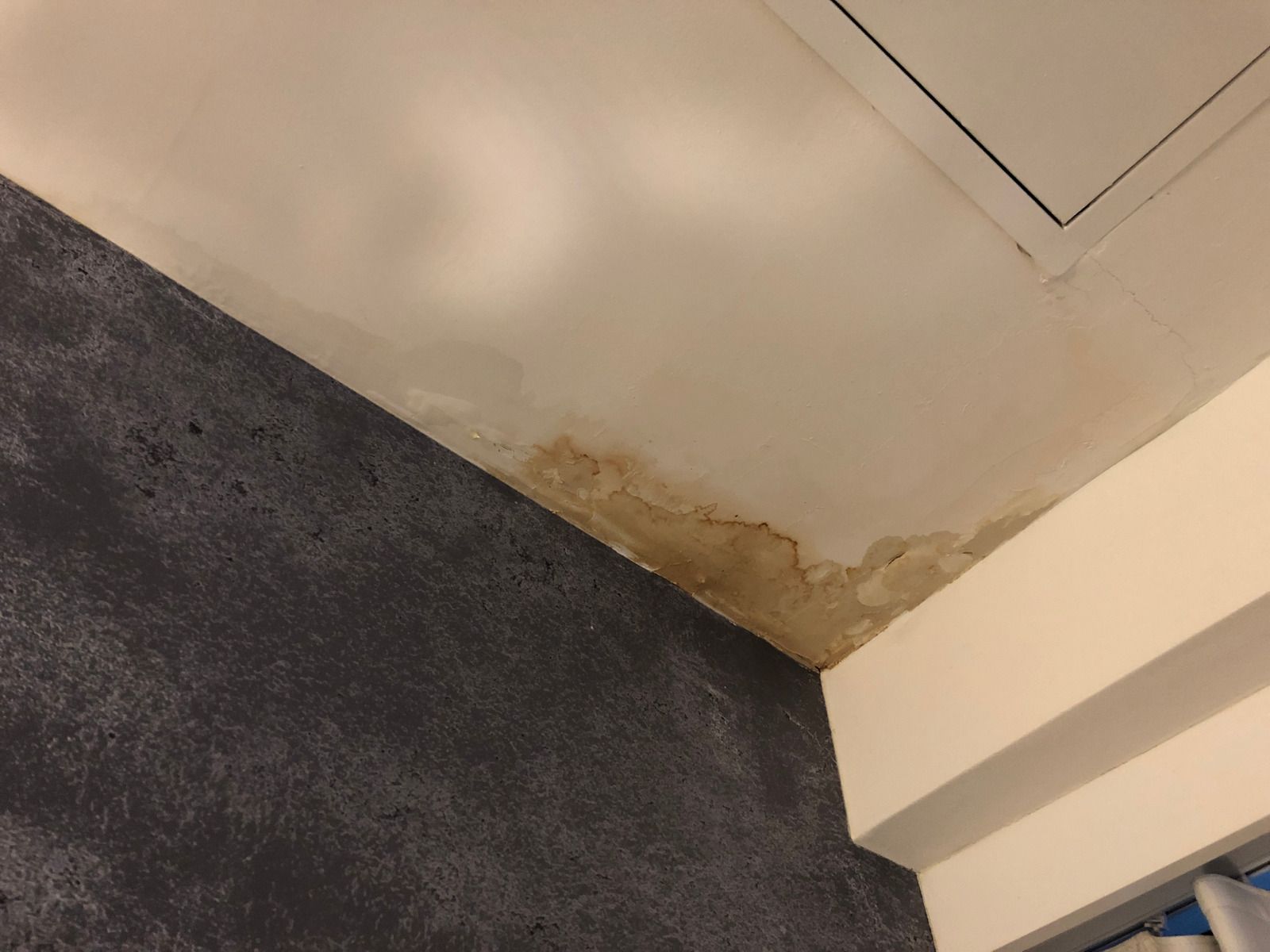
The first monsoon storm of the season rolls in fast, the way they do in the Valley: dust wall first, then wind, then rain coming in almost sideways for twenty or thirty minutes before it breaks. By the time it passes, there's a new stain spreading across the living room ceiling. You check the attic, you check the roof from the ladder, and everything looks the way it's looked for years. No missing tiles. No obvious gap. The roof did the same job it's done every dry season since you moved in, and now it's leaking.
This pattern confuses a lot of homeowners, understandably. A roof either works or it doesn't, so the logic goes. But that's not how a roofing system actually behaves in a desert climate that gets almost all its annual rainfall in violent, wind-loaded bursts. A roof can hold up fine under nine months of sun, dust, and the occasional drizzle while carrying a defect that only becomes a leak once wind-driven rain and real volume show up at the same time. Understanding why that happens tells you exactly where to look and how urgent the fix really is.
WARNING: Stay off tile roofs, and off any roof on summer afternoons. Tiles crack under your weight, and surface temperatures past noon can pass 160 degrees, hot enough to burn skin and soften your footing. Inspect from the ground or attic and let us get up there safely.
Your Roof Has Two Jobs, and Only One of Them Is Visible
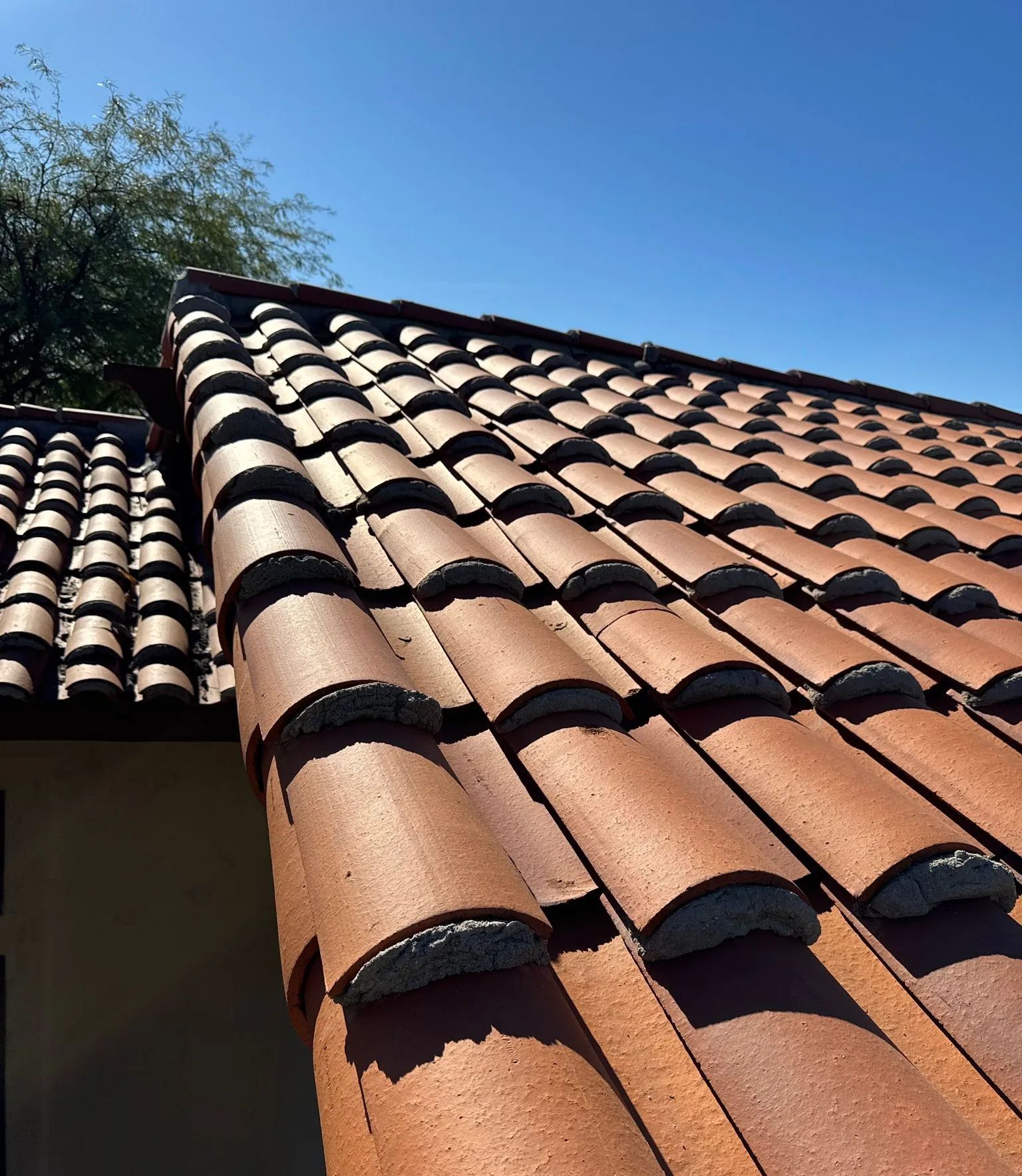
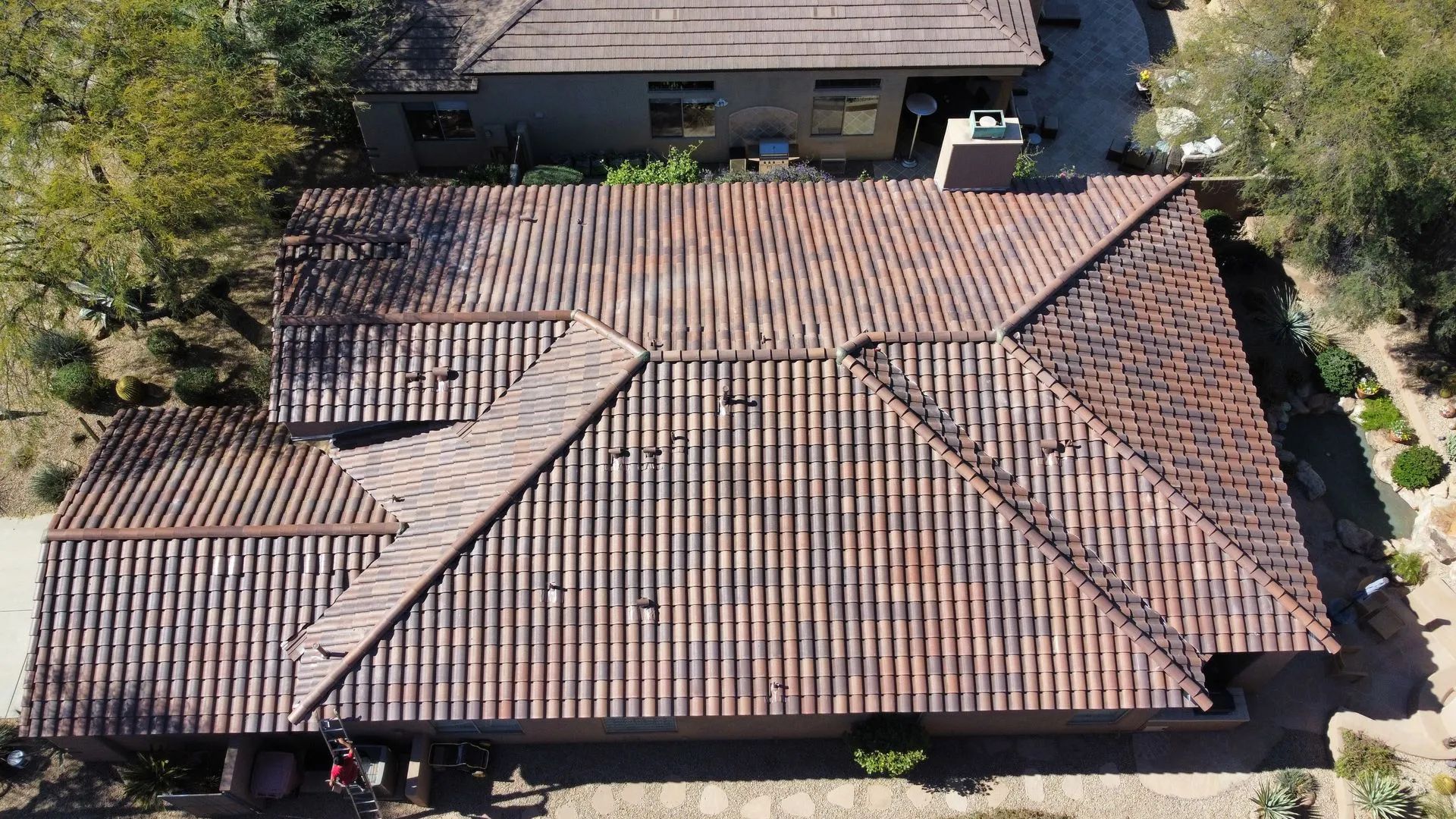
Clay tile, concrete tile, shingle roof — it doesn't matter which one sits on your house. What you see from the ground or the yard is the weather-facing layer. Tile sheds the bulk of sun and rain and takes the physical beating from wind and debris. Shingles do something similar on a pitched composition roof. Neither one, on its own, keeps water out of your home.
The Waterproofing Lives Underneath
Under every tile and every course of shingles is a continuous underlayment membrane, installed directly on the roof deck. That membrane is the actual barrier between your attic and the sky. The visible roofing material is designed to let a certain amount of water reach the underlayment during normal rain, because gaps between tiles and laps in shingle courses are unavoidable by design. The underlayment is what handles that water and directs it back out.
Flashing Does The Transition Work
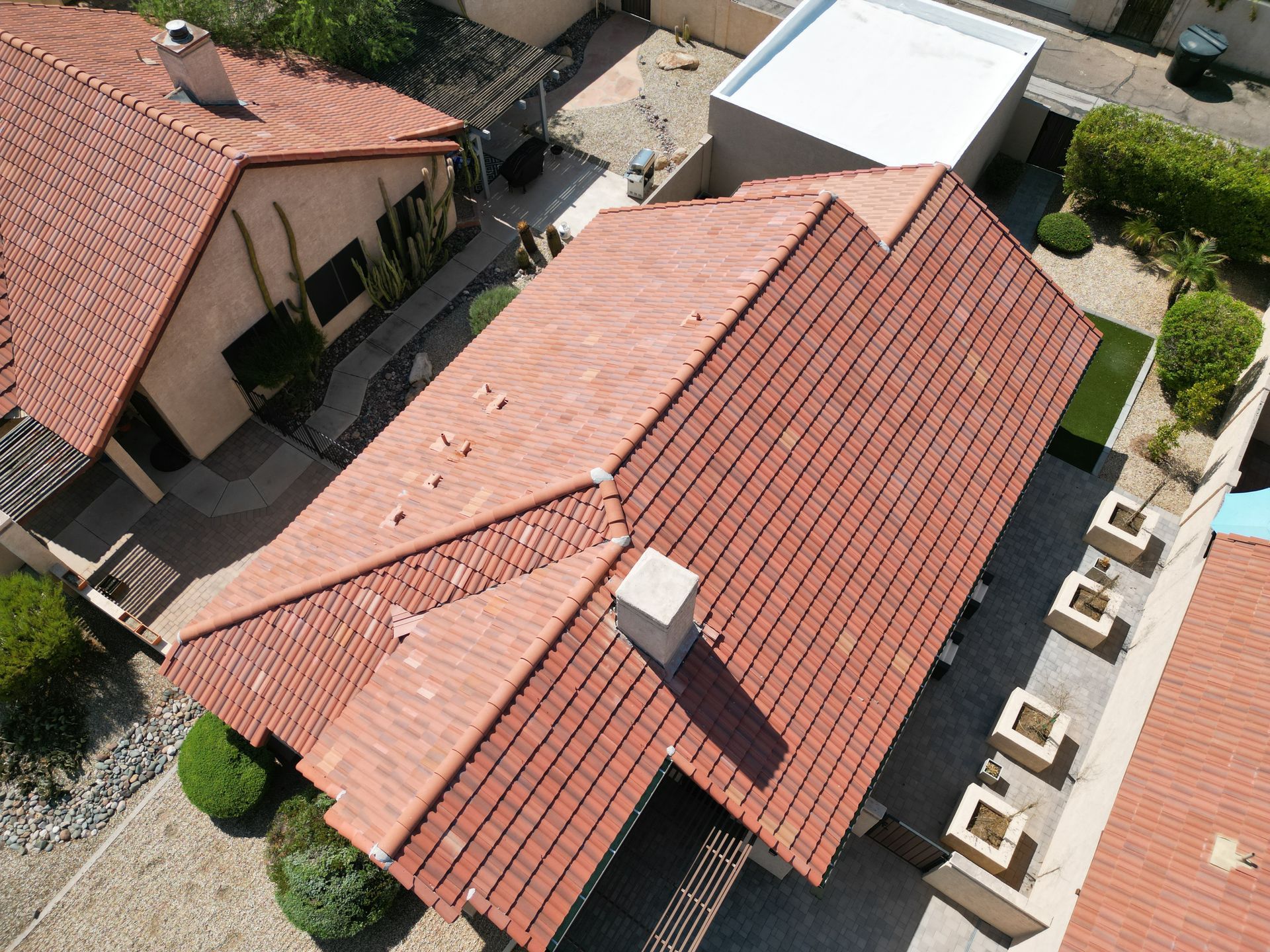
Anywhere the roof surface meets something else, a chimney, a skylight curb, a wall, a vent pipe, a valley, the tile or shingle can't seal that joint by itself. Metal flashing and sealant bridge the gap. These transitions carry more of the roof's total leak risk than the open field of tile or shingle, because they depend on a mechanical seal that degrades with heat cycling, rather than a shingled overlap that sheds water by geometry alone.
So a roof that looks fine from the driveway can have underlayment that's brittle and cracking, or flashing sealant that's shrunk and pulled away, and you would have no way to know just by looking. The tile or shingle surface hides the condition of the layer that actually matters.
Why Light Rain Never Exposes the Problem
Arizona gets rain outside of monsoon season, but most of it falls close to vertical, at low intensity, spread over hours. A roofing system under those conditions has an easy job. Water lands on the tile or shingle surface, sheds downhill with gravity, and drains off before it ever tests a marginal seal or a weak spot in the underlayment. Even a roof with real underlayment degradation or a loosening flashing joint can shrug off that kind of rain indefinitely, because the volume and the angle never put real pressure on the failure point.
Monsoon storms change every variable at once. Wind gusts during a monsoon cell regularly push rain sideways and, on a sloped tile roof, effectively upward into the underside of tile courses and flashing laps that were never designed to be hit from that direction. Add rainfall rates that can dump more water in thirty to forty-five minutes than a typical winter storm delivers over several days, and you've got wind-driven volume hitting every weak point on the roof at the same time, from an angle ordinary rain never approaches from.
That combination is why the same roof holds through a full dry season and then leaks in the first serious monsoon cell. It isn't that the storm damaged the roof on the spot, in most cases. It's that the storm is the first weather event all year capable of reaching a defect that was already there.
TIP: If your roof only leaks during wind-driven storms, that's actually useful diagnostic information. It points toward flashing and underlayment issues rather than a structural problem with the tile or shingle field itself, which narrows down what an inspection needs to focus on.
WARNING: Stay off tile roofs, and off any roof on summer afternoons. Tiles crack under your weight, and surface temperatures past noon can pass 160 degrees, hot enough to burn skin and soften your footing. Inspect from the ground or attic and let us get up there safely.
The Specific Failure Points Behind a Monsoon-Only Leak
Underlayment Nearing The End Of Its Service Life
In the Valley's heat and UV exposure, felt and synthetic underlayment ages faster than it would in a milder climate. Depending on the material, a roof's underlayment typically has a usable life in the range of fifteen to twenty-five years before it becomes brittle enough to crack and tear under stress. A roof can be well past that mark and still look fine on top, because the tile or shingle covering it hasn't changed. The underlayment only reveals its condition when wind-driven water actually reaches it in volume.
Flashing That Has Lost Adhesion Or Sealant Integrity
Chimneys, skylights, plumbing vents, and wall-to-roof transitions all rely on flashing and sealant rather than shingled overlap. Daily heat cycling in the Valley, where roof surface temperatures can swing 60 degrees or more between morning and mid-afternoon, works sealant and fastener joints loose over years. A flashing joint that's degraded but still mostly intact can pass years of light rain without issue and then leak the moment wind-driven water hits it at an angle instead of running past it vertically.
Tiles Or Shingles That Have Shifted Slightly Out Of Position
Thermal expansion, foot traffic from past service work, or minor wind events can nudge a tile or a course of shingles just enough to open a gap that doesn't show from the ground. Under calm rain, water still sheds around the shift. Under monsoon wind, that same small gap becomes an entry point.
Roof Penetrations With Aging Boots Or Collars
Pipe vents, HVAC curbs, and similar penetrations use a rubber or lead boot that seals around the fixture. These boots dry out and crack with sun exposure over time, and a cracked boot behaves the same way as degraded flashing: fine in light rain, compromised the moment wind pushes water against it directly.
Warning: A monsoon-only leak that gets ignored doesn't go away between storms. It gets worse with each subsequent event, because water that reached the underlayment or roof deck once has already started the damage, and the next storm finds the same path with less resistance.
WARNING: Stay off tile roofs, and off any roof on summer afternoons. Tiles crack under your weight, and surface temperatures past noon can pass 160 degrees, hot enough to burn skin and soften your footing. Inspect from the ground or attic and let us get up there safely.
Why "It Looked Fine Last Week" Doesn't Mean It's Fine Now
One detail trips up a lot of homeowners: the roof often gets inspected, walked, or worked on for something unrelated shortly before the leak shows up, and it passed a visual check just fine. That's consistent with everything above, not contradictory to it. A visual inspection from the ground, or even a walk on the tile, checks whether the covering material looks intact. It doesn't test whether the underlayment beneath a specific section still has its waterproofing integrity, or whether a flashing joint still holds under wind-driven pressure, because neither of those conditions is visible without lifting tile or specifically probing the transition points.
This is also why a monsoon-only leak is a legitimate reason to get a targeted inspection rather than wait and see. The storm already told you where the roof is vulnerable. What it hasn't told you is how far the damage has spread into the underlayment, decking, or insulation, and that's not something you can determine from the ground.
WARNING: Stay off tile roofs, and off any roof on summer afternoons. Tiles crack under your weight, and surface temperatures past noon can pass 160 degrees, hot enough to burn skin and soften your footing. Inspect from the ground or attic and let us get up there safely.
What a Real Diagnosis Looks Like
Tracing The Leak Path, Not Just The Ceiling Stain
Water rarely enters directly above where it shows up inside. It travels along the underside of the underlayment or across roof decking before finding a path through insulation and drywall, so the actual entry point is often several feet uphill or to the side of the visible stain. A proper diagnosis starts at the stain and works backward along the roof structure to the real source.
Checking Every Flashing Transition Near The Affected Area First
Given how disproportionately flashing accounts for wind-driven leaks, a thorough check starts at the nearest chimney, skylight, vent, or valley before assuming the open tile or shingle field is at fault.
Lifting Tile Or Shingle Courses To Assess Underlayment Condition Directly
The only way to know whether underlayment is still functional or has reached the end of its service life is to look at it directly, which means lifting the covering material in the suspect area rather than relying on what's visible from above.
Assessing How Far Moisture Has Already Traveled
Once the entry point is identified, the next question is how much of the decking, insulation, or framing near it has already absorbed water, since that scope determines whether the fix is a localized flashing or underlayment repair or something broader.
Frequently Asked Questions
Why does my roof only leak when it's windy and raining, not during light rain?
Wind-driven rain reaches flashing, underlayment gaps, and shifted tiles from angles light rain cannot. Wind pressure forces water into weak points, allowing leaks during intense monsoon storms while the same roof remains dry during calmer weather.
Does a monsoon-only leak mean I need a full roof replacement?
Not necessarily. Many seasonal leaks come from localized flashing failures, cracked penetration boots, or damaged underlayment. A targeted inspection can identify the source and determine whether a simple repair or larger roofing project is necessary.
How can I tell if it's the underlayment or the flashing that's failing?
Leaks near chimneys, skylights, vents, or wall transitions often indicate flashing problems. Leaks appearing farther across the roof may involve underlayment. However, lifting roofing materials is usually necessary to confirm the exact failure point accurately.
Why didn't this leak show up during previous monsoon seasons?
Roofing components gradually weaken from Arizona's intense heat, sunlight, and repeated temperature changes. A flashing seal or underlayment section may have been marginal previously but finally failed when a storm delivered stronger wind, rain, or both.
Is it safe to check my own roof for the source of a monsoon leak?
Avoid walking on a wet or tile roof because surfaces become slippery and tiles can crack underfoot. A ground-level inspection is safer, but finding hidden leaks usually requires professional roof access and diagnostic experience.
Will this happen again next monsoon season if I don't fix it?
Yes. A leak caused by a weak flashing joint, penetration seal, or underlayment generally will not resolve itself. Future monsoon storms can reopen the same path and allow increasing moisture into decking, insulation, and interior spaces.
WARNING: Stay off tile roofs, and off any roof on summer afternoons. Tiles crack under your weight, and surface temperatures past noon can pass 160 degrees, hot enough to burn skin and soften your footing. Inspect from the ground or attic and let us get up there safely.
Why Monsoon Leaks Should Never Be Ignored
A roof that stays dry through ordinary weather can still have a weakness waiting for the right storm. Monsoon rain exposes those vulnerabilities by combining heavy volume with strong wind, forcing water into aging flashing, worn underlayment, shifted tiles, and deteriorating penetration seals. Once a leak appears, the safest assumption is that the roof has a specific failure point that needs attention, even if everything still looks normal from the ground.
For homeowners in Mesa, AZ, understanding this pattern can prevent a small
seasonal leak
from becoming recurring interior damage. A1 Roofing Solutions
brings 25+ years of roofing experience to identifying these hidden weaknesses and determining whether the problem is isolated or part of broader roof aging. Addressing the source before another major storm arrives helps protect the roof deck, insulation, ceilings, and interior spaces from repeated moisture exposure.