Blistered, Cracked, or Faded Flat Roof in the Desert Sun? What's Happening
October 31, 2026
Quick Answer: Blisters, cracks, and fading on a flat roof are three different symptoms of the same slow fight with the sun. A blister is a pocket where the coating or membrane has let go of what's underneath, usually because air or moisture got trapped and the afternoon heat made it expand. Cracking means the surface has lost its stretch after years of ultraviolet exposure and daily temperature swings. Fading, chalking, or a yellow gray tint means the protective top coat is wearing thin. Intact blisters and hairline cracks can often be watched or patched. A blister that has split open, a soft spongy spot, or coating worn through to bare material needs a professional repair before the next monsoon storm, because that is where water finds its way in.
You walk out onto the back patio in July, glance up at the flat section of roof over the addition, and notice a bump you don't remember. Maybe it's a bubble the size of a dinner plate. Maybe it's a web of cracks, or a surface that used to be bright white and now looks like dirty chalk. The ceiling inside is dry, so you tell yourself it can wait.
Sometimes it can. Sometimes that bump is the only visible sign of a roof that's quietly coming apart underneath. The trick is knowing which one you're looking at, and that starts with understanding what the sun does to a flat roof in the Phoenix Valley over the course of a single summer day.
On a typical July afternoon, a roof surface in the Valley can reach 160 to 170 degrees. Overnight it drops by sixty or seventy degrees. That swing happens every day for months, and every material on your roof expands and shrinks with it. Flat roofs take the worst of it because they sit square to the sun for most of the day, with no slope to shed heat or water.
WARNING: Stay off tile roofs, and off any roof on summer afternoons. Tiles crack under your weight, and surface temperatures past noon can pass 160 degrees, hot enough to burn skin and soften your footing. Inspect from the ground or attic and let us get up there safely.
Start by Naming the Roof You Actually Have
Before you can read the symptoms, you need to know what kind of flat roof is overhead. In the Mesa and Phoenix area, most flat and low slope roofs fall into three families, and each one shows heat damage in its own way.
Spray Foam With A Coating
Rigid closed cell foam is sprayed in layers, then covered with an elastomeric coating that protects it from ultraviolet damage. It often looks white.
Modified Bitumen Or Built Up Asphalt
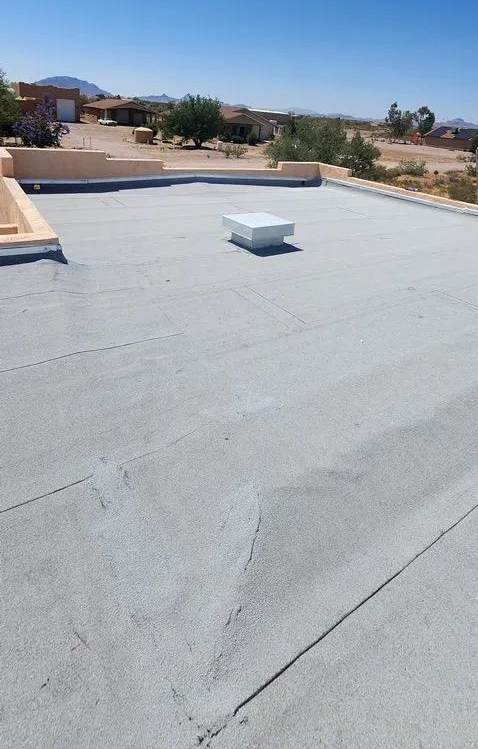
Layered asphalt sheets often have granulated cap sheets or reflective coatings. Visible seams and overlaps are common, while aging asphalt can crack and develop alligatoring.
Single Ply Membrane
A single ply membrane is a large rubber or plastic sheet installed over insulation. Seams and edges typically become problem areas before the field does.
If you aren't sure, that's normal. A lot of Valley homes have had a roof recoated, patched, or extended over the years, and the layers can be mixed. A roofer can identify the system in a few minutes by looking at a seam or a cut edge.
Blisters: Pockets of Trapped Pressure
A blister is a raised area where the surface layer has separated from what's beneath it. Press on it gently with a flat hand and it feels hollow or slightly springy, like pressing on a bubble in a wall decal.
The cause is almost always one of a few things. Air or moisture vapor got sealed in during installation, the layers never bonded fully in that spot, or water found a way in through a seam or puncture and then got covered by a coating. Whatever the starting point, the afternoon heat does the rest. Air and vapor inside the pocket expand as the roof warms, and the surface layer gets pushed upward. That's why a blister can look flatter at seven in the morning and obvious at three in the afternoon.
On Spray Foam Roofs
Blisters between foam layers can result from rushed application, poor surface preparation, or equipment problems. Coating blisters often indicate poor adhesion or moisture contamination.
On Asphalt Roofs
Asphalt blisters form between plies or beneath the membrane. Cracked tops, loose granules, or clusters of bumps suggest the problem is worsening rather than stable.
Why A Stable Blister Isn't Always Safe
A small intact blister may remain stable, but stretched membrane can split from foot traffic, hail, or expansion, creating an opening that funnels rainwater underneath.
TIP: Take a photo of each blister from the same spot each month, with a tape measure or a dollar bill laid next to it for scale. A bump that grows half an inch between July and September tells your roofer far more than a single snapshot ever could.
WARNING: Stay off tile roofs, and off any roof on summer afternoons. Tiles crack under your weight, and surface temperatures past noon can pass 160 degrees, hot enough to burn skin and soften your footing. Inspect from the ground or attic and let us get up there safely.
Cracks: The Surface Has Lost Its Stretch
Cracks come in a few styles, and the pattern matters.
Alligatoring
Alligatoring looks like reptile skin, with connected cracks across surfaces. Asphalt loses oils under ultraviolet exposure, while coatings develop similar crazing as flexibility slowly declines with age.
Linear Splits
A single long crack along seam, parapet edge, or roof line usually indicates movement. Shifting decking or insulation can force openings and allow water entry.
Cracks Around Penetrations
Cracks around penetrations form where different materials meet. Sealants and coatings dry out first, and small openings around vents or pipes can allow water intrusion.
Hairline surface cracking doesn't mean the roof is finished. Small cracks, gouges, or punctures under about four inches across can usually be repaired on a foam roof with a sealant compatible with the coating. Larger damage means cutting out the affected foam and respraying it. The same logic applies to asphalt and single ply roofs: small and surface level means patch, deep or widespread means look at the whole system.
WARNING: Stay off tile roofs, and off any roof on summer afternoons. Tiles crack under your weight, and surface temperatures past noon can pass 160 degrees, hot enough to burn skin and soften your footing. Inspect from the ground or attic and let us get up there safely.
Fading and Chalking: The Sunscreen Is Wearing Out
Fading looks harmless, which is exactly why people ignore it. A white roof that has turned gray, tan, or yellow is not just an aesthetic problem. It's telling you the coating is thinning.
Chalking
Run your palm across the surface. If you come away with a white powder on your skin, the binder in the coating is breaking down and the pigment is sitting loose on top. The coating still covers the roof, but it isn't doing its full job reflecting heat.
Dark Patches
Dirt, algae, or standing water residue can make darker spots that absorb more heat than the white areas around them. Those spots run hotter, expand more, and wear out faster than the rest of the roof. They show up often on south and west facing sections, where afternoon sun is strongest.
Bare Foam
On a spray foam roof, this is the one that matters most. When coating has worn completely through and you can see raw, tan or orange foam, ultraviolet light is attacking the foam itself. It turns powdery, then soft, and then it starts to lose thickness. Foam that has degraded this far can't just be painted over.
WARNING: Stay off tile roofs, and off any roof on summer afternoons. Tiles crack under your weight, and surface temperatures past noon can pass 160 degrees, hot enough to burn skin and soften your footing. Inspect from the ground or attic and let us get up there safely.
Sorting What You See by Urgency
Not every flaw needs the same response. A roofer looking at a flat roof will usually sort what they find into three buckets.
Watch And Document
Small intact blisters, light chalking, and hairline cracks can be photographed, measured, and monitored during the next scheduled roof inspection for changes.
Repair Now
Repair split blisters, seam cracks, punctures, soft spots, and exposed layers. Damaged areas should be dried, rebuilt, and sealed with compatible materials.
Recoat Or Rework
Broad fading, chalking, and crazing may call for recoating when underlying foam or membrane remains sound and dry, restoring protection and reflectivity.
There's one important catch. A new coating only works over a roof that is clean, dry, and sound. Spraying or rolling coating over wet insulation, an open blister, or a loose old coating doesn't fix those problems. It buries them where you can't see them, and the heat then pushes them back up through the new surface.
WARNING: Stay off tile roofs, and off any roof on summer afternoons. Tiles crack under your weight, and surface temperatures past noon can pass 160 degrees, hot enough to burn skin and soften your footing. Inspect from the ground or attic and let us get up there safely.
What Not to Do When You Spot Damage
Roof problems get worse when well meaning fixes go wrong. A few mistakes come up again and again.
Don't Pop The Blister
Cutting into a blister without removing damaged material and rebuilding properly creates a hole. Pockets may contain moisture, which needs removal before sealing.
Don't Smear On Roof Cement
Roof cement may provide a temporary patch, but often cracks or lifts later. Incompatible materials can complicate proper repairs and damage existing coatings.
Don't Pressure Wash A Faded Roof
Pressure washing can force moisture into cracks, strip loose coating, and damage soft foam. Faded surfaces need gentle cleaning with appropriate methods before recoating.
Don't Treat The Roof Like A Patio
Walking across blisters or soft foam can crack surfaces or crush underlying material. A flat roof may appear solid while remaining structurally compromised underneath.
Warning: A soft, spongy, or sunken area on a flat roof usually means the material underneath is wet or has degraded. Keep weight off it and have it checked before the next storm, because a spot that gives under your foot can break through completely.
Notice that nobody on that list is telling you to hurry out and do something with a ladder. The best thing most owners can do is look, photograph, and call someone who can read the roof properly.
WARNING: Stay off tile roofs, and off any roof on summer afternoons. Tiles crack under your weight, and surface temperatures past noon can pass 160 degrees, hot enough to burn skin and soften your footing. Inspect from the ground or attic and let us get up there safely.
What a Proper Flat Roof Inspection Looks Like
A good inspection isn't a quick glance from the edge. Here's what the crew should be doing.
They start by identifying the system and checking for records of earlier repairs or recoats. Then they walk the roof carefully, marking every blister, crack, soft spot, and area of worn coating. Seams, edges, drains, scuppers, and penetrations get extra attention because that's where failures start.
Next comes moisture. A blister on its own tells you little. What matters is whether the material around and beneath it is dry. On roofs with a history of leaks, a moisture scan or a careful test cut can show whether the damage is local or spread through the insulation.
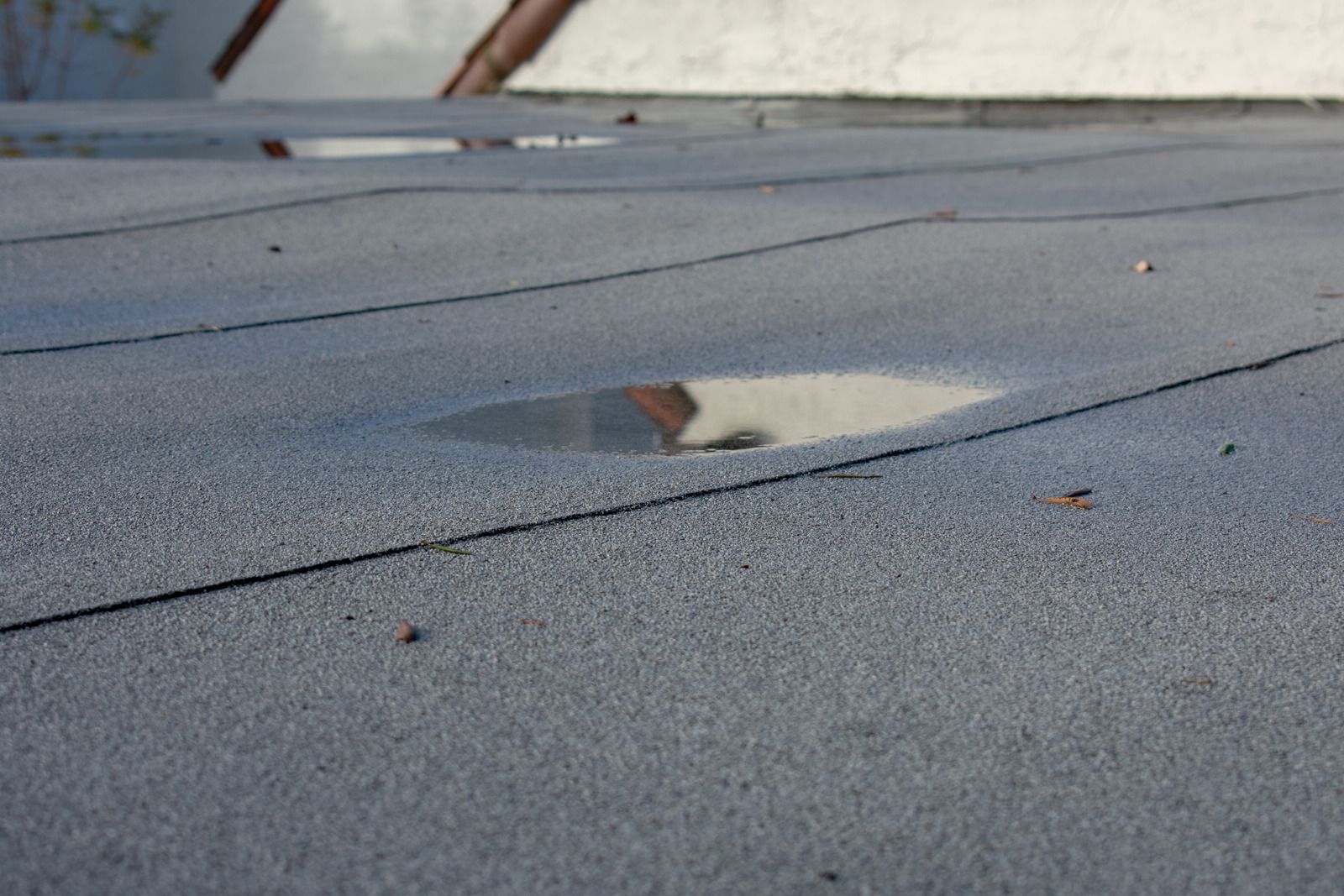
Drainage gets checked too. Flat roofs in the Valley don't see rain often, but when monsoon storms hit, a lot of water arrives in a short time. Ponding in low spots speeds up coating failure and adds weight to areas that may already be weak. A roof that holds standing water for more than a day or two after a storm has a drainage problem on top of whatever else is going on.
Finally, you should get a plain answer: watch it, repair it, recoat it, or plan for something bigger. You should also get photos, so you can see what the crew saw.
WARNING: Stay off tile roofs, and off any roof on summer afternoons. Tiles crack under your weight, and surface temperatures past noon can pass 160 degrees, hot enough to burn skin and soften your footing. Inspect from the ground or attic and let us get up there safely.
Timing It Around the Monsoon
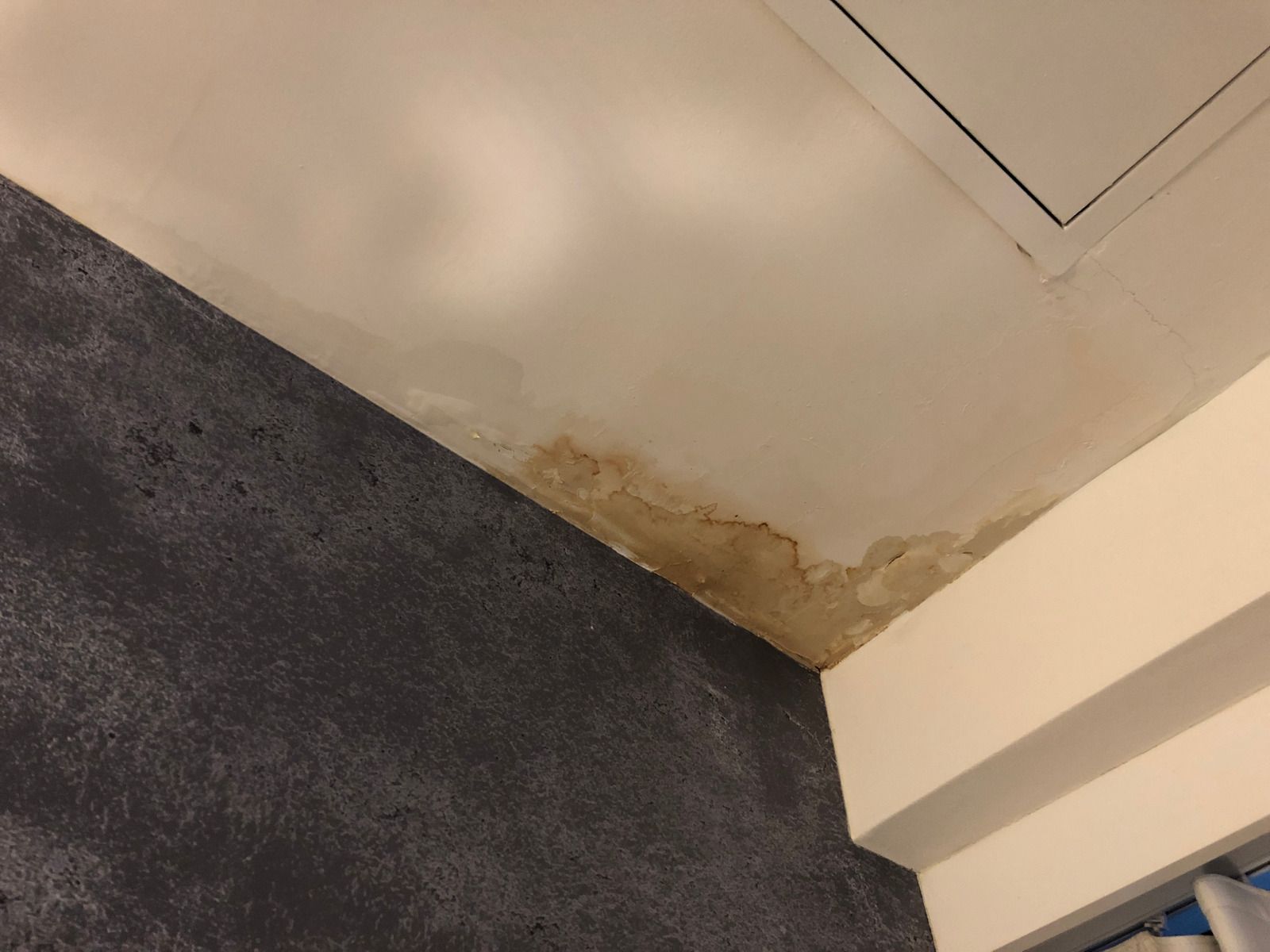
Monsoon season in the Valley runs from mid June through September, and the roof you have in May is the roof that takes the first big storm. Heat expands blisters through the summer, then monsoon winds and rain find whatever has opened up. By October, hidden damage has often turned into stained ceilings.
The sweet spot for an inspection is late spring, before the storms start, so repairs and recoating can be done in dry weather. A second look after the monsoon catches anything that gave way. If your roof is already showing blisters, cracks, or chalking in early summer, don't wait for a leak to prove the point. A roof that's repaired in a dry week is a calmer project than one that's patched during a downpour.
Frequently Asked Questions
Is a blister on my flat roof an emergency?
Usually not, if it is small, intact, and away from seams and drains. It still deserves a professional look soon, since you cannot see what the pocket holds.
Why does my white foam roof look yellow or gray?
The coating is aging. Ultraviolet light, dust, and heat break down its binder and pigment, so it loses reflectivity and needs recoating before it wears through to the foam.
Can I just put a new coat over a blistered roof?
Not safely. Coating over an active blister never fixes trapped moisture or poor adhesion beneath. The blister must be opened, dried, repaired, and rebuilt first, then coated with everything else.
How often should a desert flat roof be inspected?
Twice a year suits most roofs, once in late spring before monsoon season and once in early fall after it. Add a check after any major wind or hail event.
Do cracks in the surface always mean the roof is leaking?
No. Fine surface cracks can sit a while without letting water through. But cracks near seams, edges, and vent pipes are serious, and any you can slip a fingernail into need sealing.
Does all this mean I need a whole new roof?
Not necessarily. Many flat roofs with blisters, cracks, and fading can be repaired and recoated. Full replacement makes sense when moisture spreads through insulation, the deck fails, or repairs keep reappearing.
WARNING: Stay off tile roofs, and off any roof on summer afternoons. Tiles crack under your weight, and surface temperatures past noon can pass 160 degrees, hot enough to burn skin and soften your footing. Inspect from the ground or attic and let us get up there safely.
Reading the Roof Before the Roof Reads You
A flat roof in the desert tells you what is wrong long before it leaks, if you know how to listen. The bump that grows through a July afternoon, the cracks that open in August, and the chalky white powder on your hand are all early notes in a story that ends with a wet ceiling when they are left alone. Each symptom points at a different stage of the same slow fight with the sun overhead.
Most of these problems take less effort and cause far less disruption when they are caught at the blister and hairline crack stage, well before moisture reaches the insulation. The goal is not to panic over every bubble but to know which ones are sitting quiet and which ones are counting down. A1 Roofing Solutions
brings 25+ years of foam, tile, and shingle roofing experience to homes across Mesa, AZ, reading what the surface and the layers beneath it are telling you.