Ponding Water on a Flat Roof After Monsoon Rain? Why It's a Problem
November 20, 2026
Quick Answer: Ponding water is rainwater that is still sitting on a flat or low slope roof 48 hours after the storm has passed. On a desert roof it matters because the Valley sun bakes the same wet spot day after day, which wears out the coating, feeds algae, and adds weight to a section of roof that is already holding more than its share. The usual causes are clogged scuppers or drains, a deck that has sagged slightly over the years, and a surface that never had enough slope to begin with. A shallow puddle that dries by the next afternoon is normal. A puddle that is still there on day three, or that leaves a ring of dirt and green film behind, needs a professional look before the next storm arrives.
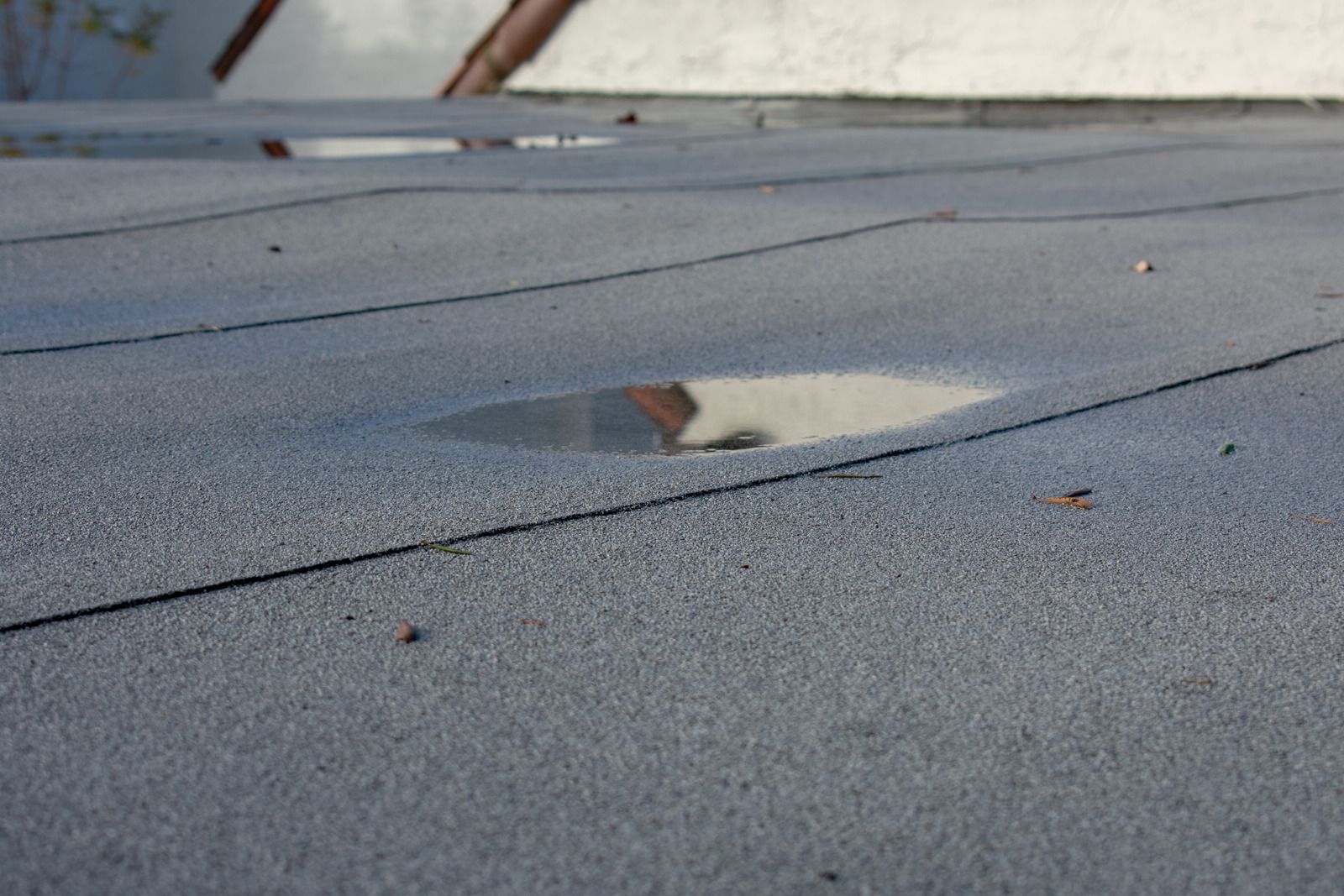
The storm moves through on a Tuesday evening. Dust first, then wind, then twenty minutes of rain so heavy the patio furniture floats a little. By Thursday morning the sky is clear and the yard is dry, but you glance up at the flat roof over the garage or the back addition and see a wide, shallow pool still sitting there, reflecting the sky. It hasn't leaked. The ceiling below is fine. So you tell yourself the sun will take care of it.
Sometimes it does, in another day or so. But in the Phoenix Valley, a puddle that outlasts the storm by two full days usually isn't a weather problem anymore. It's a roof problem, and it tends to get a little worse every monsoon season. Understanding why water stays put, and what it does while it sits there, will tell you whether you are looking at a minor chore or an early warning.
WARNING: Stay off tile roofs, and off any roof on summer afternoons. Tiles crack under your weight, and surface temperatures past noon can pass 160 degrees, hot enough to burn skin and soften your footing. Inspect from the ground or attic and let us get up there safely.
What Counts as Ponding and What Doesn't
Roofers draw a simple line. Water that is still on the roof 48 hours after the rain stopped is called ponding. Anything that evaporates or drains before that is just a wet roof.
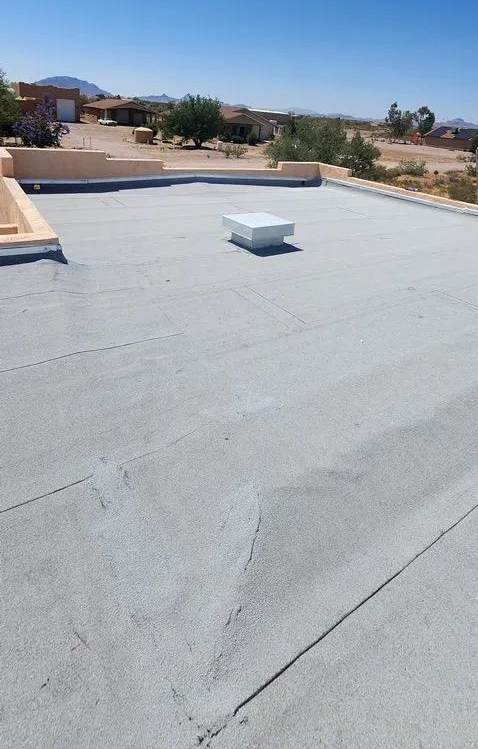
That distinction exists because flat roofs are not meant to be perfectly flat. A properly designed low slope roof is built with a gentle pitch, commonly at least a quarter inch of drop for every foot of run, so water travels toward a drain, a scupper, or a gutter. When it works, the roof empties itself within hours. When it doesn't, you get the same pool in the same place after every storm.
A Damp Film Is Not Ponding
In the Valley, a thin sheet of water on a white roof can vanish in an afternoon once the sun comes back. A faint dark outline where the water used to be is also common and not alarming on its own.
A Puddle With A Tide Line Is
If you can see a ring of dirt marking where the water used to reach, or a stained, slightly discolored patch that sits in the same low spot, the water has been standing there repeatedly and for long enough to leave residue behind.
Timing Is Your Best Test
Note when the rain stopped, and check the spot at the same hour two days later. If water is still there, you have your answer without climbing anything.
WARNING: Stay off tile roofs, and off any roof on summer afternoons. Tiles crack under your weight, and surface temperatures past noon can pass 160 degrees, hot enough to burn skin and soften your footing. Inspect from the ground or attic and let us get up there safely.
Why Water Stays Behind on a Valley Roof
Standing water is a symptom, and several different problems produce it. Finding the right one decides the fix.
Blocked Drains And Scuppers
Monsoon season is also dust season. A single storm can leave a layer of fine silt, leaves, palm fronds, and windblown trash along the roof edge. Wet silt packs into the mouth of a scupper the way mud packs a drain, and a half blocked opening drains slowly enough to leave a pool behind. This is the easiest cause to fix and the most common one.
Too Little Slope From The Start
Many patio covers, room additions, and garage tops in the Valley were built with barely any pitch. Some were framed flat and left to rely on a coating to do the rest. If the surface never sloped toward an outlet, water has nowhere to go and settles wherever the surface dips lowest.
A Deck That Has Settled Or Sagged
Roof framing moves slightly over decades. Add a heavy puddle on top, and the sag deepens, which holds more water, which adds more weight. This is a feedback loop, and it is the reason a small ponding spot can slowly grow across several seasons.
Compressed Or Wet Insulation
On roofs with insulation underneath the membrane, a leak that has soaked the board can leave it soft and thin. A spongy low spot holds water the same way a sagging mattress does.
Rooftop Equipment And Added Layers
Air conditioning units, vents, curbs, and old patches all interrupt the natural path water takes toward an outlet. Water backs up behind them. Layers of coating or patching applied over many years can also build up uneven ridges that trap water in the gaps between them.
An Outlet In The Wrong Place
Sometimes the scupper is clear and the roof slopes toward it, but the drain sits higher than the lowest part of the surface. Water drains until it reaches the lip of the outlet and stops, leaving a permanent shallow pond below that level.
What Standing Water Does to a Desert Roof
A puddle doesn't look dangerous, which is why it gets ignored. Here is what it quietly does while it sits.
It Ages The Coating Faster
A roof coating is designed to shed water and reflect sunlight, not to sit submerged for days. Different coatings handle standing water differently, and some acrylic products can show damage from ponding within a day or two, while others are designed to tolerate it far longer. The part that matters for you is that the low spot on your roof is always the first place the coating starts to fail.
It Cooks The Same Patch Repeatedly
After the storm, the sun heats that water and the roof surface beneath it. When the water finally evaporates, that spot goes through a longer cycle of wet, hot, dry, and cool than the dry sections around it. Over a few seasons you will often see blistering, chalking, or lifting concentrated right where water likes to sit.
It Feeds Algae And A Dirt Film
Standing water collects dust, and dust plus moisture plus warmth equals a green or black film. That film darkens the surface, so the spot absorbs more heat than the white roof around it. It also holds moisture against the coating, and it can clog drains further when it grows near the outlet.
It Adds Real Weight
A square foot of water one inch deep weighs a little over five pounds. A pond twenty feet across and two inches deep isn't a few buckets. It is a substantial load sitting on one section of framing, which is exactly how a mild sag becomes a deeper one.
It Looks For The Smallest Opening
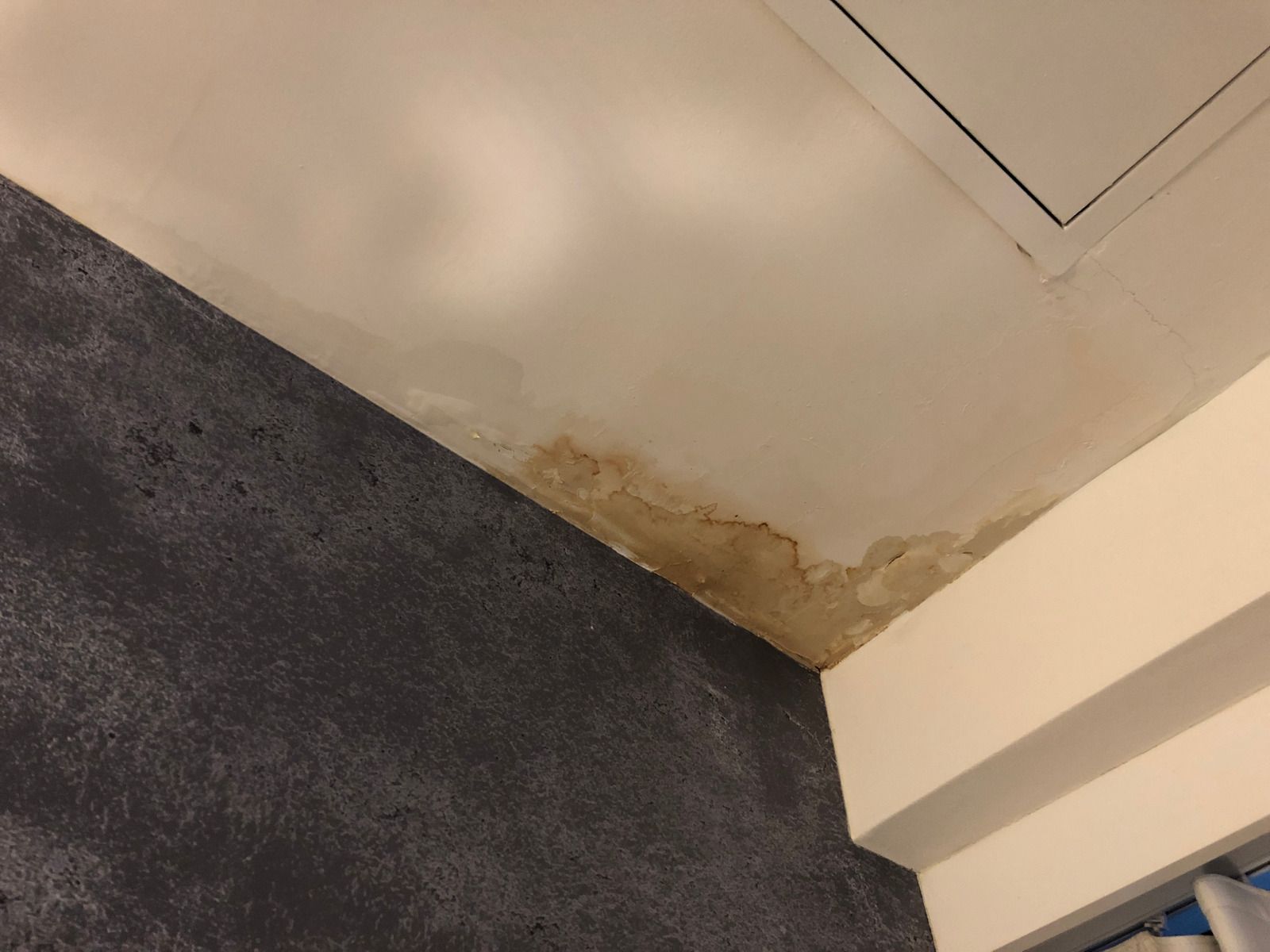
Seams, patches, the base of a vent pipe, and a hairline crack in the coating are all fine under a passing shower. They behave differently when water sits on top of them for days instead of minutes. Standing water has time to find the weakness, and the first sign inside the house is often a stain on the ceiling directly below the low spot.
TIP: Take a photo of the puddle the morning after a storm, then again 48 hours later, from the same spot with something familiar in frame for scale. Two pictures with a date on them tell a roofer more than a long description ever will.
WARNING: Stay off tile roofs, and off any roof on summer afternoons. Tiles crack under your weight, and surface temperatures past noon can pass 160 degrees, hot enough to burn skin and soften your footing. Inspect from the ground or attic and let us get up there safely.
A Quick Check You Can Do From the Ground
You don't need to walk on a flat roof to learn a good deal about it, and you should not climb up there after a storm if the surface is still slick.
Look From A Second Story Window Or A Ladder At The Edge
Note where the water sits in relation to the nearest drain, scupper, or edge. A pool right next to an outlet suggests a blockage. A pool in the middle of the roof suggests a dip or a low area.
Look At The Edges Of The Roof From Below
Water running out of scuppers should show a clear, steady flow during rain, and the outside wall beneath should show no heavy staining or algae streaks. Dark streaks below an outlet can mean it has been overflowing.
Check The Ceiling Below
Walk the room under the pond. Faint rings, a slightly bubbled paint patch, or a musty smell all point to moisture that has already made it through.
Check The Spot Again In A Week
If the puddle returns in the same place after every storm, even a small one, that is a pattern and not an accident.
WARNING: Stay off tile roofs, and off any roof on summer afternoons. Tiles crack under your weight, and surface temperatures past noon can pass 160 degrees, hot enough to burn skin and soften your footing. Inspect from the ground or attic and let us get up there safely.
How a Roofer Fixes Ponding
The correct repair depends on the cause, and the options run from a quick cleaning to a modest rebuild.
Clear And Maintain The Outlets
If debris is the problem, cleaning scuppers, drains, and gutters can solve it in an hour. This is also the simplest maintenance habit a flat roof owner can build, and it belongs on the calendar before monsoon season and again after it.
Build Slope Where There Is None
On a foam roof, crickets and tapered sections can be sprayed to direct water toward an outlet. On other systems, tapered insulation or a sloped layer does the same job. The goal is positive drainage, meaning every part of the surface has a clear downhill path.
Add Or Relocate An Outlet
When the low spot is far from any drain, a new scupper or drain at the lowest point is sometimes the cleanest answer. It has to be installed and sealed properly, because a poorly done penetration creates a leak path where there wasn't one before.
Repair The Deck Or The Insulation
If the sag is from soft insulation or a weakened section of framing, the surface can't be corrected from the top. The wet material is removed, the deck is checked, and the layers are rebuilt so the surface sits where it should.
Recoat The Affected Area
Once the cause is fixed, damaged and chalky coating at the old pond site can be repaired and recoated, ideally with a product that suits the conditions of that spot. Recoating before the cause is solved just paints over a problem that returns.
Warning: A low spot that feels soft, spongy, or springy underfoot may be sitting on wet insulation or a weakened deck. Stay off it, keep furniture and people away from the area, and have it examined before the next storm adds more water and more weight.
WARNING: Stay off tile roofs, and off any roof on summer afternoons. Tiles crack under your weight, and surface temperatures past noon can pass 160 degrees, hot enough to burn skin and soften your footing. Inspect from the ground or attic and let us get up there safely.
What Not to Do
Don't Sweep Or Squeegee The Water Off Every Time
It feels productive, but it hides the pattern and puts you on a wet roof. Treat each puddle as information.
Don't Drill Your Own Drain Hole
A hole through the roof without proper flashing and sealing is a leak waiting to happen, and it may not even sit at the true low point.
Don't Pile On Coating Over Standing Water Stains
New coating applied to a dirty, damp, or algae covered surface will not bond well. The surface has to be clean and dry first.
Don't Wait For A Stain Inside
By the time a ceiling shows water, the roof has been wet for a while. The easiest repairs happen before that point.
WARNING: Stay off tile roofs, and off any roof on summer afternoons. Tiles crack under your weight, and surface temperatures past noon can pass 160 degrees, hot enough to burn skin and soften your footing. Inspect from the ground or attic and let us get up there safely.
Timing It Around the Monsoon Calendar
Monsoon season in the Valley runs from mid June through September, and the roof you have in May is the roof that takes the first big storm. The calendar does most of the planning for you.
Late spring: Clear all outlets, remove accumulated dust and debris, and look for any area that held water during winter rain. This is the best time to correct slope or repair low spots, because the weather is dry and the work isn't rushed.
During the season: After every significant storm, do the 48 hour check. Photograph anything that lingers.
Early fall: Walk the roof again, or have it walked, to see what the summer left behind. Fall is a good time to recoat worn areas before winter rain returns.
Frequently Asked Questions
How long is too long for water to sit on a flat roof?
Anything beyond 48 hours after the rain stops is treated as ponding. Water that disappears within a day is normal drainage plus evaporation, but water that lingers into the third day points to a slope or drainage issue.
Can a few inches of water on my flat roof collapse it?
A collapse is unlikely on a healthy, well supported roof, but it is not something to dismiss. Water is heavy, and a deep pond on a deck that has already sagged adds load to exactly the wrong spot. If the surface is visibly dipping or feels soft, get it checked promptly.
Will the Arizona sun eventually evaporate it and solve the problem?
It will remove the water, but not the cause. The low spot will fill again after the next storm, and every cycle of wet and hot wears the coating in that area faster than the rest of the roof.
Does ponding mean my roof is leaking?
Not necessarily. Many roofs hold water for a long time without leaking, but standing water gives every seam and hairline crack more time to let moisture in. A roof that ponds is a roof that is under more stress than it should be.
Do all flat roofs in the Valley pond?
No. A roof built with proper slope and clear outlets can shed monsoon rain within hours. Ponding tends to show up on additions, patio covers, older roofs where the deck has settled, and roofs where drains have been blocked or poorly placed.
Is ponding more of a problem on a foam roof or a built up roof?
Both are affected, in different ways. On a foam roof, the coating over the low spot wears out first, and bare foam is vulnerable to the sun. On a built up or modified bitumen roof, standing water works at seams and surface layers. In both cases the fix starts with getting water off the surface.
WARNING: Stay off tile roofs, and off any roof on summer afternoons. Tiles crack under your weight, and surface temperatures past noon can pass 160 degrees, hot enough to burn skin and soften your footing. Inspect from the ground or attic and let us get up there safely.
What a Lingering Puddle Is Telling You
Water that lingers on your flat roof after a monsoon storm is the roof showing you where it is weakest. The drain packed with silt, the dip in the deck, and the section that never had enough slope announce themselves the same way: a pool sitting there on day three. A shallow puddle that dries by the next afternoon is nothing to worry over, but one that leaves a ring and returns each storm is a pattern, not an accident.
Most ponding problems are manageable when they are caught early. A cleaned outlet, a small slope correction, or a recoated low spot can end the pattern before water ever finds its way inside. The roofs that cause trouble are the ones where the same puddle was noticed, ignored, and left to deepen through several more seasons. With more than 25+ years of roofing across Mesa, Arizona, A1 Roofing Solutions
finds the low spots and gets the water off for good.